
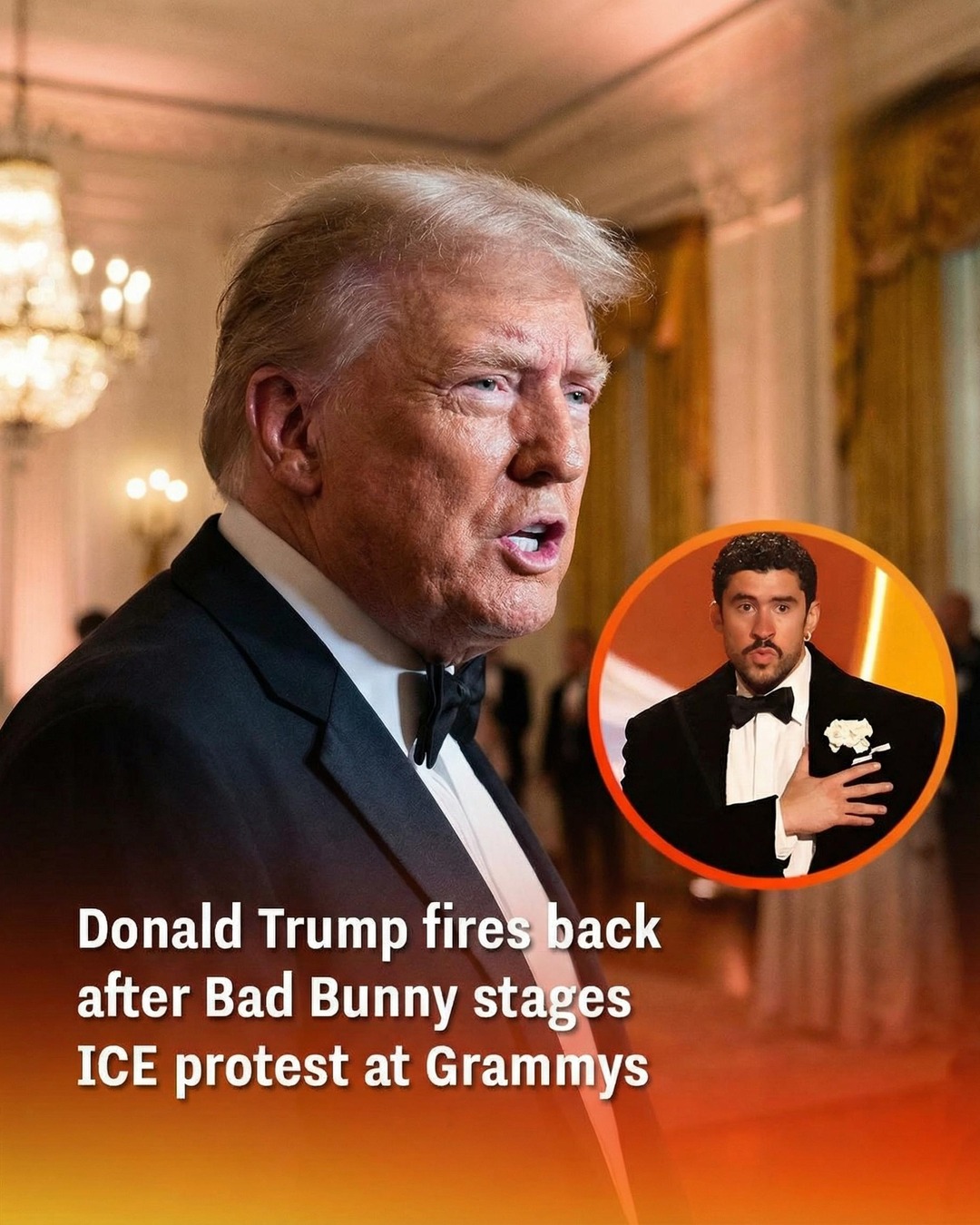
What was meant to be a celebration of artistic achievement quickly became a cultural talking point when the latest Grammy Awards unfolded in Los Angeles. Beyond the trophies and performances, the evening reflected how major entertainment events increasingly double as platforms for broader conversations. As millions tuned in, themes of identity, unity, and personal experience found their way into acceptance speeches, reshaping the tone of the night from festive to reflective.
One of the most widely discussed moments came from Bad Bunny, whose historic win was paired with remarks emphasizing compassion and shared humanity. His message drew strong applause inside the venue and ignited widespread discussion online. For many viewers, the moment felt authentic and timely; for others, it reignited the familiar debate over whether award shows should remain focused solely on entertainment or allow space for personal and social expression.
That debate soon crossed into the political sphere. Donald Trump publicly criticized what he described as the growing politicization of entertainment ceremonies. His response also referenced jokes delivered by the show’s host, Trevor Noah, who used satire to comment on public figures during the broadcast. The exchange reignited discussions about comedy, free speech, and the role of humor in high-profile cultural events.
Attention is now shifting toward the upcoming Super Bowl, where Bad Bunny is scheduled to take part in a major performance. Alongside excitement, conversations have included confirmations of enhanced security measures, which officials say are standard for events of that scale. Together, the Grammys and the Super Bowl highlight a growing reality: today’s largest stages often carry influence beyond entertainment, offering moments that reflect — and sometimes challenge — the wider social climate audiences bring with them.