
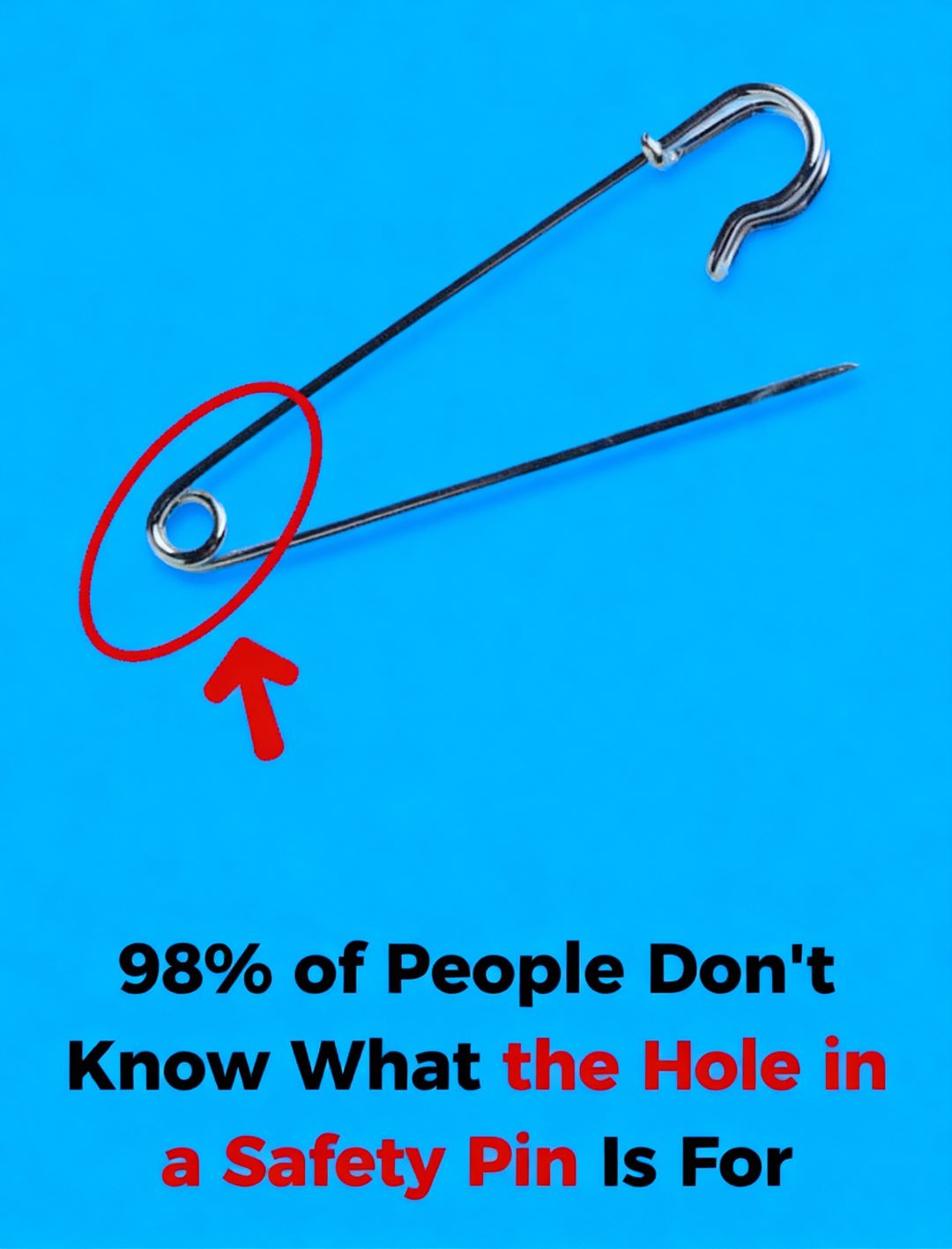
A safety pin looks like one of the simplest tools around—small, inexpensive, and easy to ignore. Most people see it as a quick fix for loose fabric or a temporary fastener. But there’s a subtle detail built into its design that many never notice: the tiny hole at one end. This opening isn’t decorative or accidental. It exists for a practical reason, and understanding it reveals how much quiet intelligence lives inside everyday objects.
The hole was designed to make sewing tasks easier, especially when guiding elastic, ribbons, or drawstrings through fabric casings. By threading string, yarn, or thin cord through that opening, the safety pin becomes far easier to control. Instead of twisting or slipping inside a waistband or sleeve, it moves smoothly and steadily forward. This added grip helps prevent frustration, saves time, and keeps the pin from disappearing into the fabric mid-task.
This feature reflects a broader mindset behind traditional sewing tools. Long before specialty gadgets were common, tools were created to do more than one job efficiently. Every detail served a purpose. The safety pin’s small hole fits that philosophy perfectly—it solves a common problem without adding complexity. It’s a reminder that older designs often focused on practicality, durability, and problem-solving rather than convenience alone.
Even today, that tiny hole remains useful beyond sewing. It can help guide cords through tight spaces, secure attachments in crafts, or add control when organizing small items. The safety pin proves that good design doesn’t need to be flashy. Sometimes, the smartest solutions are hidden in plain sight—waiting for someone to notice how thoughtfully they were made.