
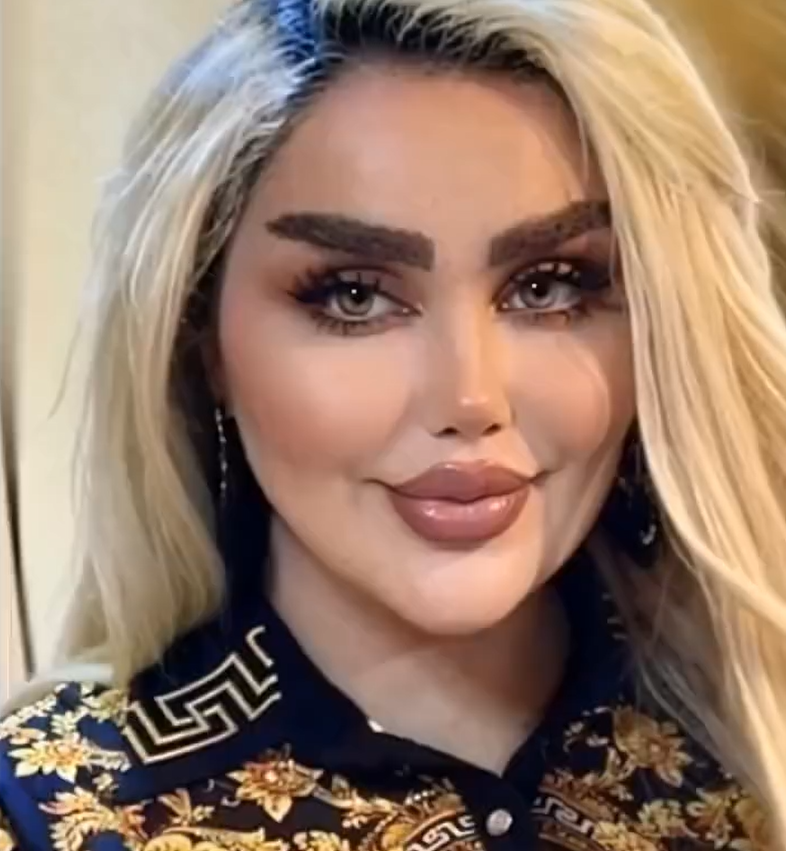
Dalia Naeem, a 29-year-old actress and presenter from Baghdad, recently drew international attention after unveiling a dramatic new look. According to reports, she has undergone 43 cosmetic procedures over time, resulting in a highly stylized appearance featuring golden hair and doll-inspired features. A viral video shared alongside her makeup artist—who compared her look to “Barbie”—quickly circulated online, earning her the nickname “Iraqi Barbie.”
As the clip spread across social media platforms, it sparked widespread discussion about cosmetic enhancements and personal expression. Many viewers focused on the precision of her styling, makeup artistry, and coordinated aesthetic. Others viewed her transformation as an example of how far some individuals are willing to go to achieve a specific vision of beauty. The conversation soon expanded beyond her individual story, touching on broader themes such as evolving beauty standards and the powerful influence of digital culture.
Public reaction has been mixed. Supporters describe her transformation as a bold form of self-expression and personal autonomy. Critics, however, have raised questions about the pressures that can drive extreme cosmetic changes and the importance of understanding potential health considerations. These differing perspectives reflect an ongoing global debate about how appearance, identity, and societal expectations intersect—particularly in an era shaped by constant online visibility.
Regardless of where opinions fall, Naeem’s transformation highlights the complex relationship between modern beauty culture and personal choice. Her story underscores how aesthetic decisions can become public conversations in today’s interconnected world. As cosmetic procedures become more common and more visible, discussions about safety, authenticity, and self-definition are likely to remain part of the broader dialogue surrounding beauty and identity.