
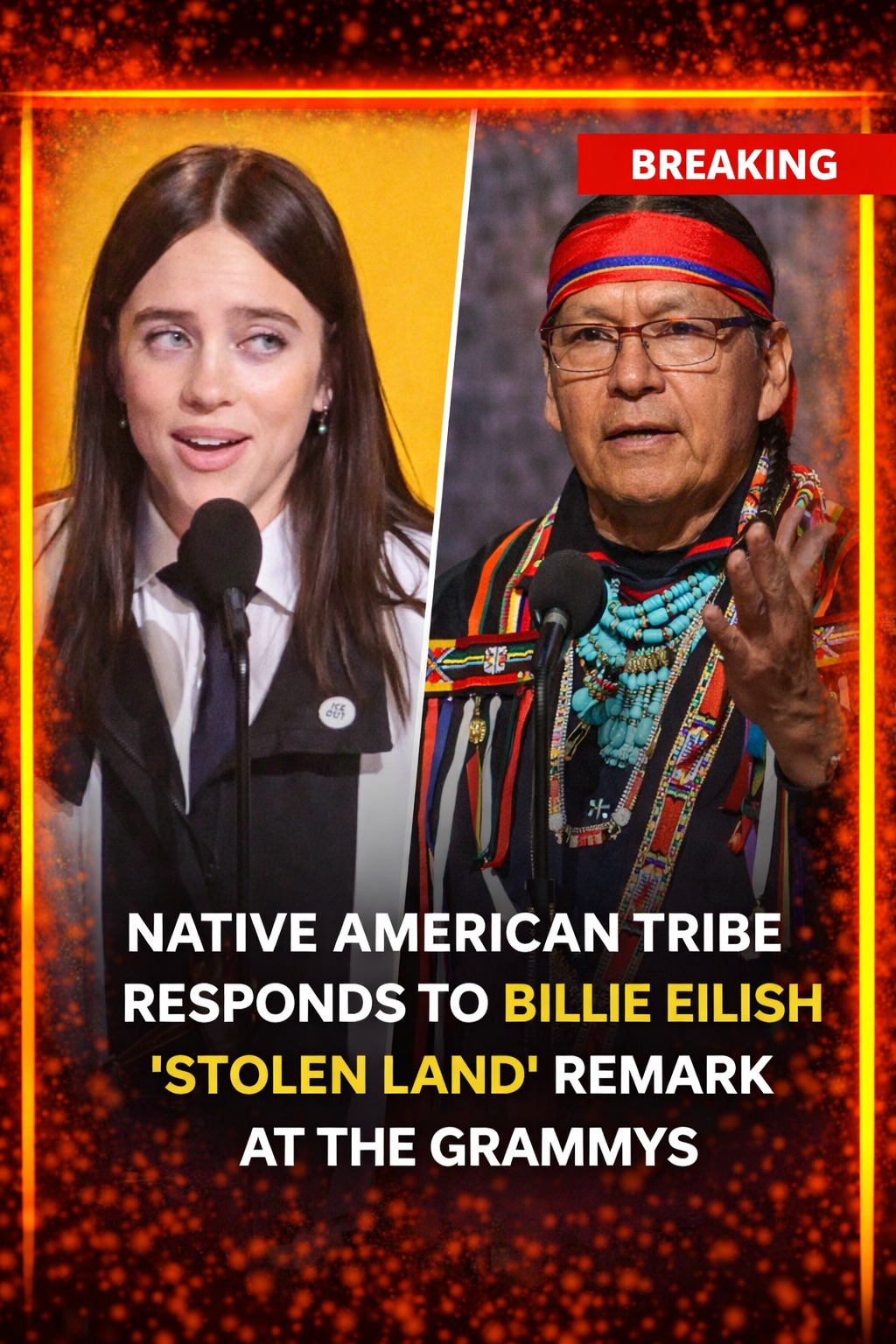
When Billie Eilish stated “no one is illegal on stolen land” during her appearance at the Grammy Awards, the comment quickly captured public attention. Applause from some audiences was matched by debate across social media, where opinions ranged widely. Beyond the online reactions, the statement also resonated with the Tongva people—the Indigenous community historically connected to the Los Angeles Basin, where the ceremony was held.
In their response, Tongva representatives offered a thoughtful perspective. They recognized the intent to bring visibility to Indigenous history while noting that no prior consultation or relationship had been established. Rather than calling for symbolic gestures, they emphasized the importance of informed recognition—encouraging the public to learn their name, understand their heritage, and approach acknowledgment with respect. For them, awareness carries weight only when it is paired with genuine understanding.
As commentators and public figures discussed the broader implications of the remark, the Tongva highlighted a message centered on responsibility rather than spectacle. They expressed interest in collaborative efforts, including conversations with The Recording Academy about land acknowledgment practices. Their viewpoint underscored a key idea: lasting progress grows from continued engagement, not solely from high-profile moments.
The exchange offers a wider reflection on modern advocacy. Visibility can spark important conversations, but meaningful relationships help sustain them. Statements may inspire curiosity, yet lasting change depends on consistent effort and open dialogue. The Tongva phrase “Ekwa Shem — We are here” stands as both affirmation and invitation—a reminder that recognition is most powerful when it leads to ongoing respect, thoughtful action, and shared commitment.