
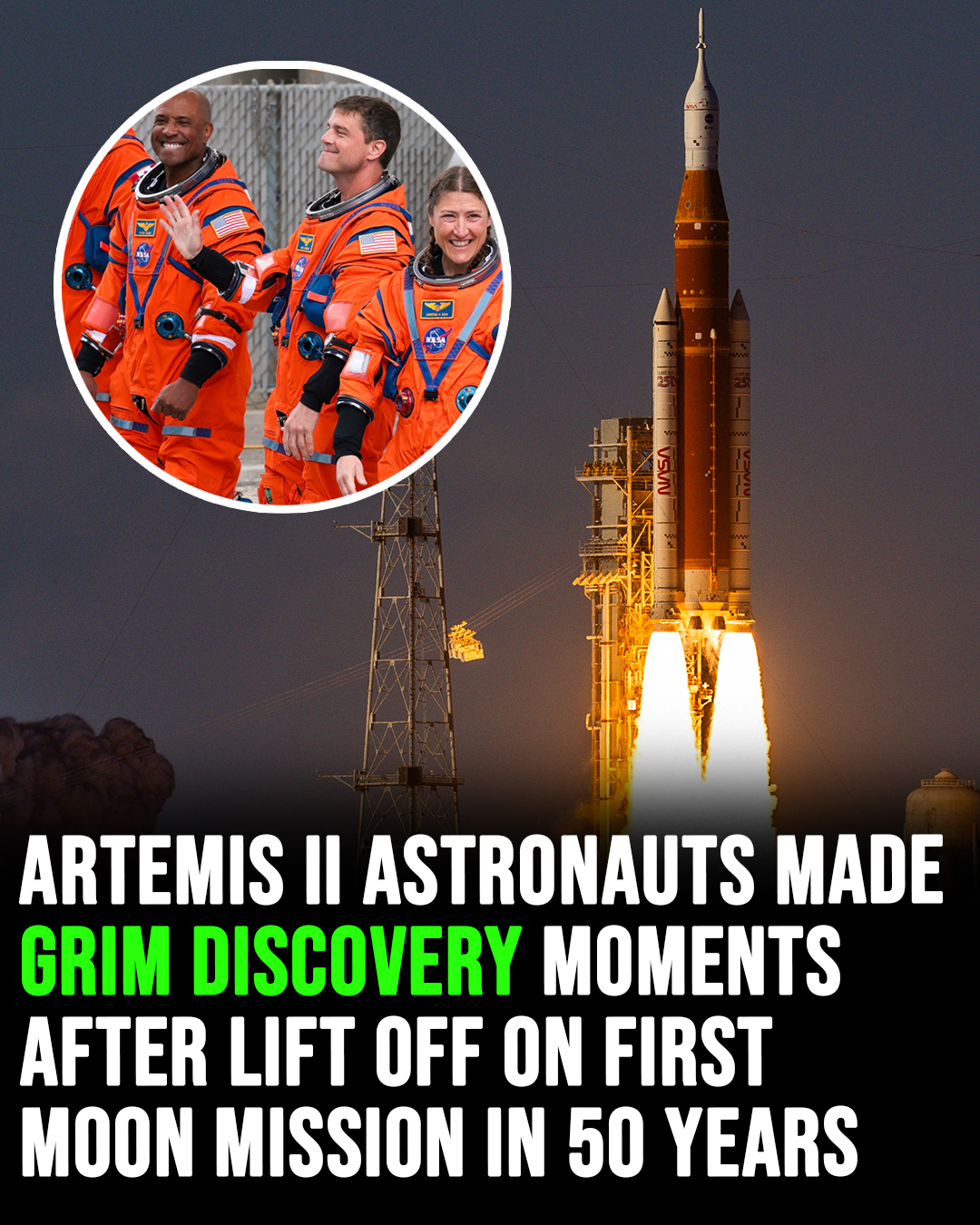
In the brilliance of liftoff, Artemis II seemed nearly perfect—its ascent clean, its trajectory precise, its crew carrying the weight of global anticipation. But just hours into the journey, reality reminded everyone that even the most advanced missions depend on the simplest systems. A malfunction in the spacecraft’s toilet quickly shifted the mood. In microgravity, such a failure is more than inconvenient—it touches on health, comfort, and the psychological balance needed to sustain a long-duration mission.
Inside the Orion capsule, the challenge became immediate and unavoidable. With guidance from NASA engineers on the ground, Christina Koch took on the task of diagnosing and fixing the issue. Instead of gazing out at the vastness of space, she found herself focused on tools, components, and careful instructions—transforming a technical setback into a moment of hands-on problem-solving under pressure.
When mission control finally confirmed that the system was operational again, the tension gave way to relief. Laughter and celebration filled the cabin, a shared acknowledgment of how close the situation had come to becoming something more serious. It was a reminder that success in space is rarely about perfection—it’s about adaptability, teamwork, and the ability to stay calm when plans go sideways.
In the end, the episode became part of the mission’s story, not as a flaw but as proof of resilience. Even as humanity pushes toward the Moon and beyond, these journeys remain grounded in something unmistakably human: the need to solve problems, support one another, and carry on—no matter how unexpected the challenge may be.