
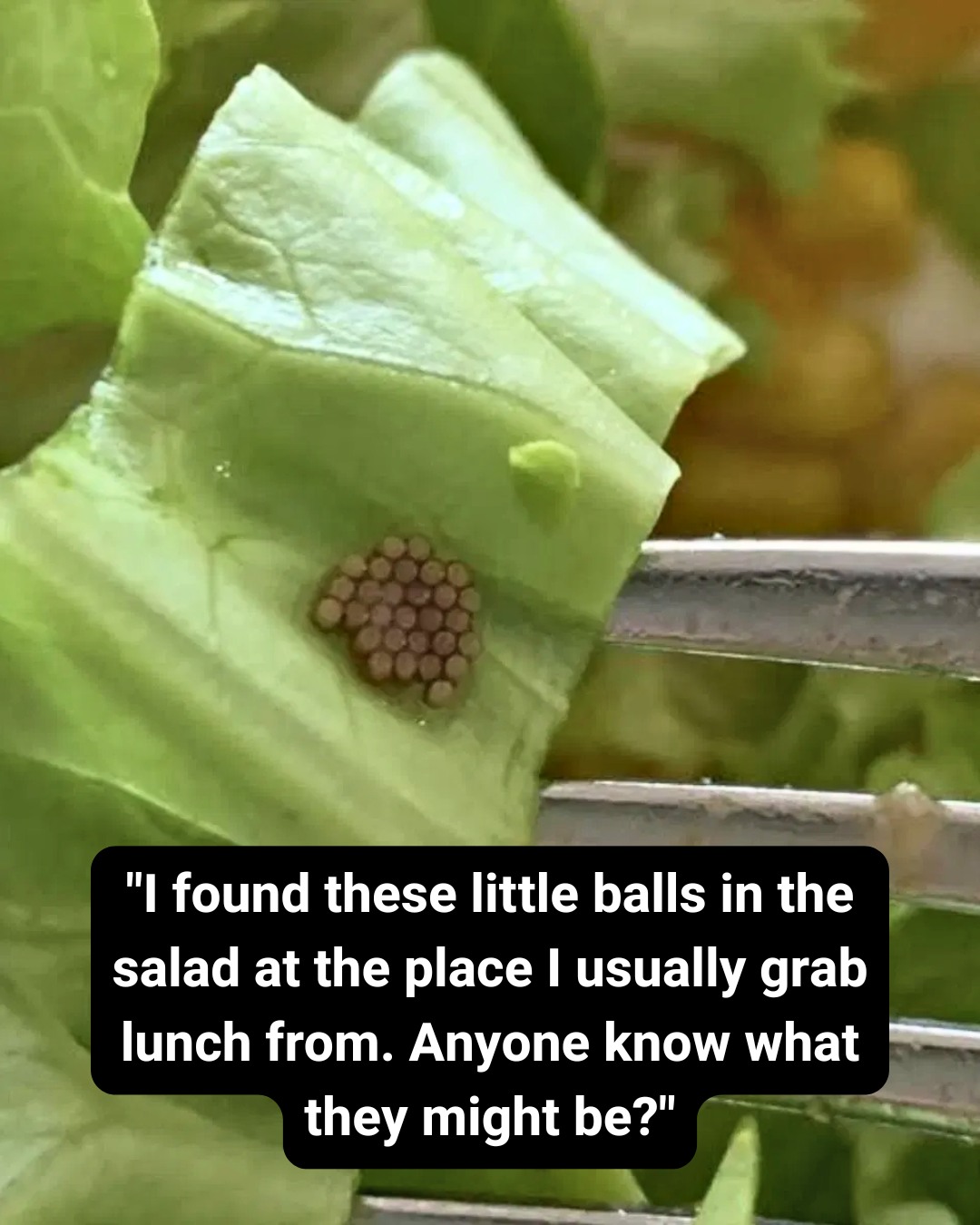
It started as a routine lunch, the kind most of us rush through without much attention. She sprinkled what looked like quinoa over her salad, only to pause when something didn’t seem quite right. The tiny brown clusters were too evenly arranged and firmly attached to a lettuce leaf. A closer look quickly revealed they weren’t grains at all. Trusting her instincts, she stopped eating immediately — a simple but important decision when something appears unusual in your food.
As unsettling as this experience may sound, it’s not entirely uncommon. Some insects naturally deposit eggs on the undersides of leafy plants, including vegetables commonly used in fresh salads. Because produce travels from field to store through multiple handling stages, small natural elements can occasionally slip through despite modern cleaning practices. Fortunately, accidental contact is typically not associated with serious health concerns. More often, the situation highlights the importance of proper washing and careful preparation rather than posing an immediate threat.
If you encounter something unexpected while dining out, the best approach is calm and practical. Stop eating right away and politely alert the restaurant staff so they can address the issue. Taking a clear photo can help communicate what you found without confusion. Most establishments value food safety and will respond with an apology, replacement meal, or refund while reviewing their kitchen procedures. Should your concern not be taken seriously, reporting the matter to local health officials can help encourage stronger oversight.
At home, a few preventative habits can greatly reduce the chances of surprises. Even produce labeled “pre-washed” benefits from an additional rinse under cool running water. Gently separating leaves and inspecting folds — especially in greens like romaine, spinach, or butter lettuce — allows you to spot anything unusual before it reaches your plate. These small steps take only moments but help support both food quality and peace of mind, turning everyday meals into safer, more enjoyable experiences.