
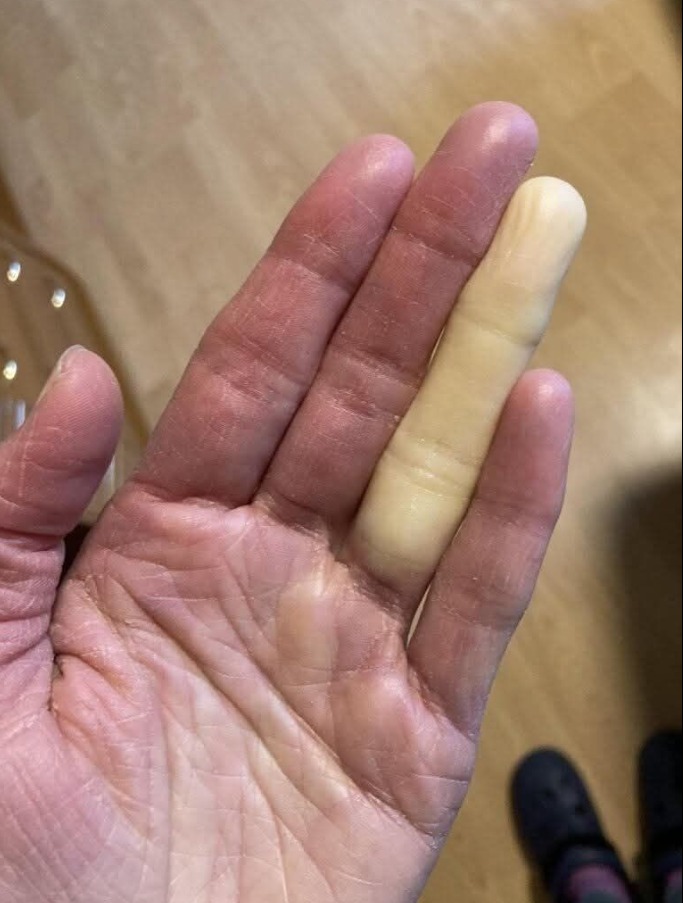
As winter settles in and temperatures drop, the body sometimes responds in ways that feel surprising—or even alarming. For many people, cold weather doesn’t just bring discomfort; it can trigger visible changes in the fingers, toes, ears, or nose. Skin may turn pale, bluish, or even numb, creating a moment of concern before sensation slowly returns. It’s easy to dismiss this as a normal reaction to the cold, but for a significant number of individuals, there’s more going on beneath the surface.
This response is often linked to Raynaud’s phenomenon, a condition where small blood vessels temporarily narrow in reaction to cold or stress. When this happens, blood flow to certain areas is reduced, leading to the noticeable color changes. The sequence is often distinct—white as circulation decreases, blue as oxygen levels drop, and red as blood flow returns. While it may look dramatic, the process is the body’s attempt to conserve heat, though it can feel uncomfortable or even painful.
For many, Raynaud’s is mild and manageable, but it’s more common than people realize—affecting a notable portion of adults, often without a formal diagnosis. In some cases, it exists on its own (primary Raynaud’s), while in others it may be connected to underlying conditions that affect blood vessels or the immune system. Because of this, recurring or severe symptoms shouldn’t be ignored, especially if they interfere with daily life or worsen over time.
Understanding this condition is the first step toward managing it effectively. Simple habits—like keeping hands and feet warm, reducing stress, and avoiding sudden temperature changes—can make a meaningful difference. And when symptoms feel more intense or persistent, seeking medical advice can help rule out related conditions and guide proper care. What might seem like a minor winter inconvenience is, for many, a signal worth paying closer attention to.