
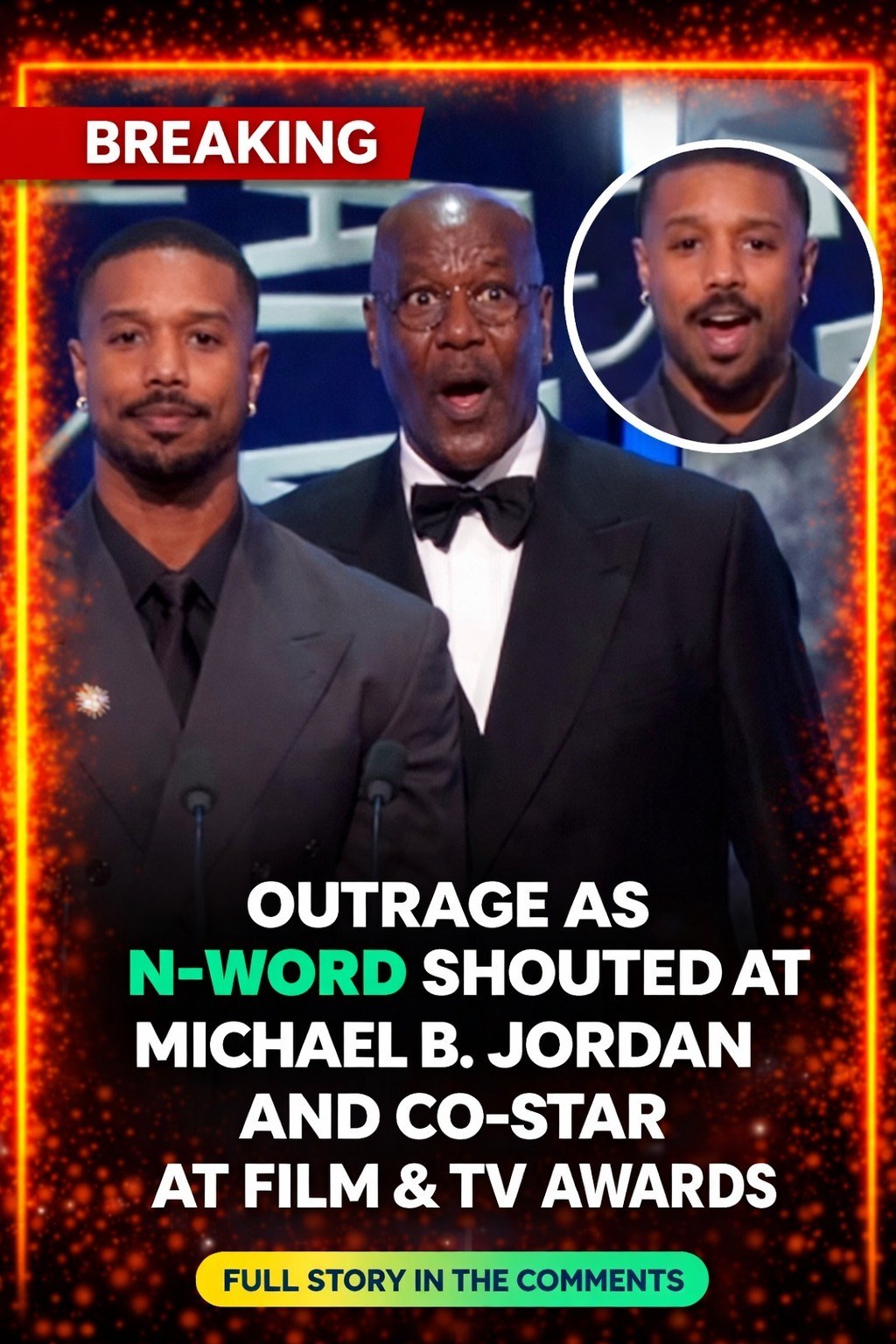
The atmosphere inside London’s Royal Festival Hall shifted abruptly during the BAFTAs ceremony when an unexpected outburst interrupted the evening. Presenters Michael B. Jordan and Delroy Lindo were on stage as cameras rolled, and what began as a routine segment suddenly gave way to confusion and audible shock in the audience. Within moments, the celebratory tone gave way to uncertainty as attendees and viewers tried to understand what had happened.
The voice was later identified as belonging to Tourette’s advocate John Davidson, whose involuntary vocal tic included a racial slur. The incident quickly extended beyond the hall itself, circulating widely across social media platforms where short clips intensified public reaction. For many, hearing such language in a prestigious setting carried deep emotional weight, particularly given the painful history tied to racial slurs.
The moment underscored a difficult intersection of realities. Tourette syndrome can involve involuntary sounds or words spoken without intent or conscious control. At the same time, language shaped by historical harm understandably provokes strong emotional responses. Navigating both truths simultaneously requires nuance, empathy, and clarity—especially in high-profile public spaces.
As the ceremony paused, host Alan Cumming addressed the audience, explaining that the outburst was linked to Tourette syndrome rather than deliberate malice. His remarks aimed to restore context in a charged moment. The incident ultimately served as a reminder of how live events can confront complex human realities—and how understanding, even when difficult, remains essential.