
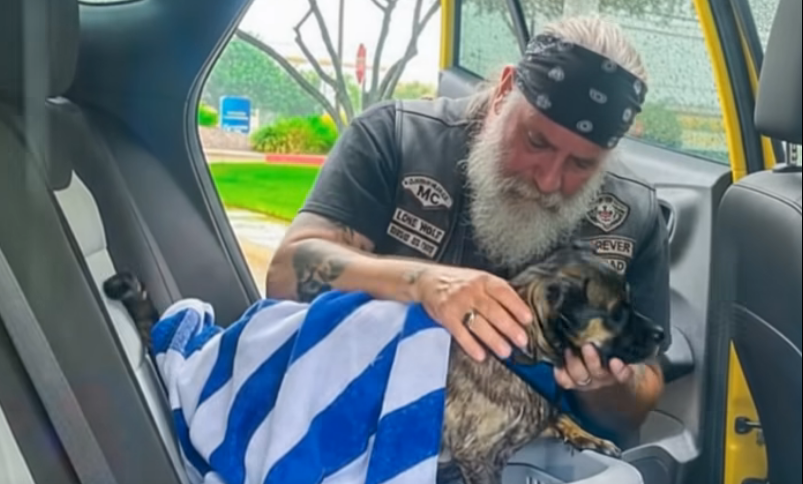
I was driving home from work one late afternoon when I spotted a motorcycle pulled over on the shoulder of Highway 52. At first, I almost kept going—people often say bikers are independent, the kind who handle trouble on their own. But something about the scene made me slow down. A man in worn leather was kneeling in the grass, his shoulders shaking as he held something wrapped in a blue towel. When he looked up, I saw tears cutting through the dust on his face, and in that instant, I knew something was deeply wrong.
As I stepped closer, I saw what he was cradling — a small German Shepherd puppy, injured and barely moving. His hands, rough from years of riding, trembled as he whispered softly to her, the way you might comfort a frightened child. He told me he’d found her lying on the road, struck by a car that hadn’t stopped. “She was crying,” he said quietly. “I couldn’t just ride past.” In that moment, every stereotype I’d ever held about “tough men” faded. Compassion, I realized, doesn’t have one face — it wears many, even those hidden behind leather and helmets.
We drove to the nearest animal hospital together, the puppy nestled in his arms. His name was Robert, though his friends called him “Nomad.” The whole way there, he kept whispering to the little dog, promising her safety. “You’re gonna be okay, baby girl,” he said, voice trembling but steady. At the clinic, he refused to leave until she was out of danger. He sat in the waiting room quietly, his large hands clasped together, as if holding back every fear he’d ever felt.
A few days later, I called to check on them. The vet told me the puppy had survived, and when I stopped by, I found her curled up on Robert’s lap, her leg wrapped but her tail wagging faintly. “I named her Hope,” he said, smiling through tired eyes. Watching them together, I understood something simple but profound: real strength isn’t loud or showy — it’s the quiet courage to stop, to care, and to choose kindness when no one’s watching.