
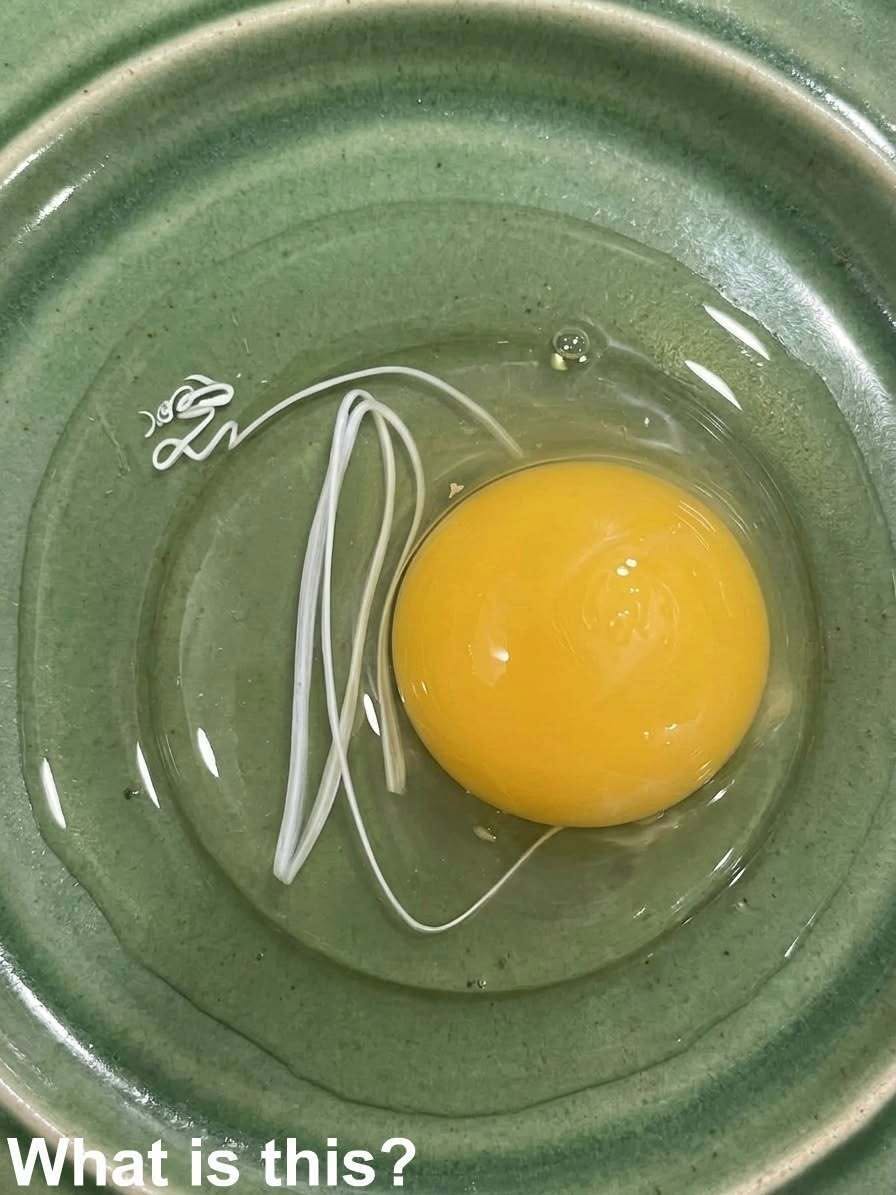
A simple breakfast routine took an unexpected turn when a strange white strand appeared inside a freshly cracked egg. While preparing fried eggs, the unusual feature immediately caught attention and raised concerns about whether the egg was safe to eat. Since unexpected details in food can sometimes be mistaken for signs of spoilage, the discovery quickly became a source of curiosity.
To find out more, the remaining eggs in the carton were inspected. Interestingly, none of them contained the same visible strand. Rather than providing reassurance, the difference made the situation seem even more unusual. It was easy to wonder whether something was wrong with that particular egg.
After consulting food safety experts and reliable cooking resources, the mystery was solved. The white strand was identified as the chalaza, a natural part of an egg’s internal structure. These protein-rich strands help keep the yolk centered and protected inside the shell. In fact, a noticeable chalaza is often considered a sign that an egg is fresh.
What initially seemed like a cause for concern turned out to be a fascinating lesson about everyday food. Understanding the purpose of the chalaza replaced uncertainty with confidence and highlighted how many common ingredients contain natural features that often go unnoticed. Sometimes, a simple breakfast can become an opportunity to learn something new.