
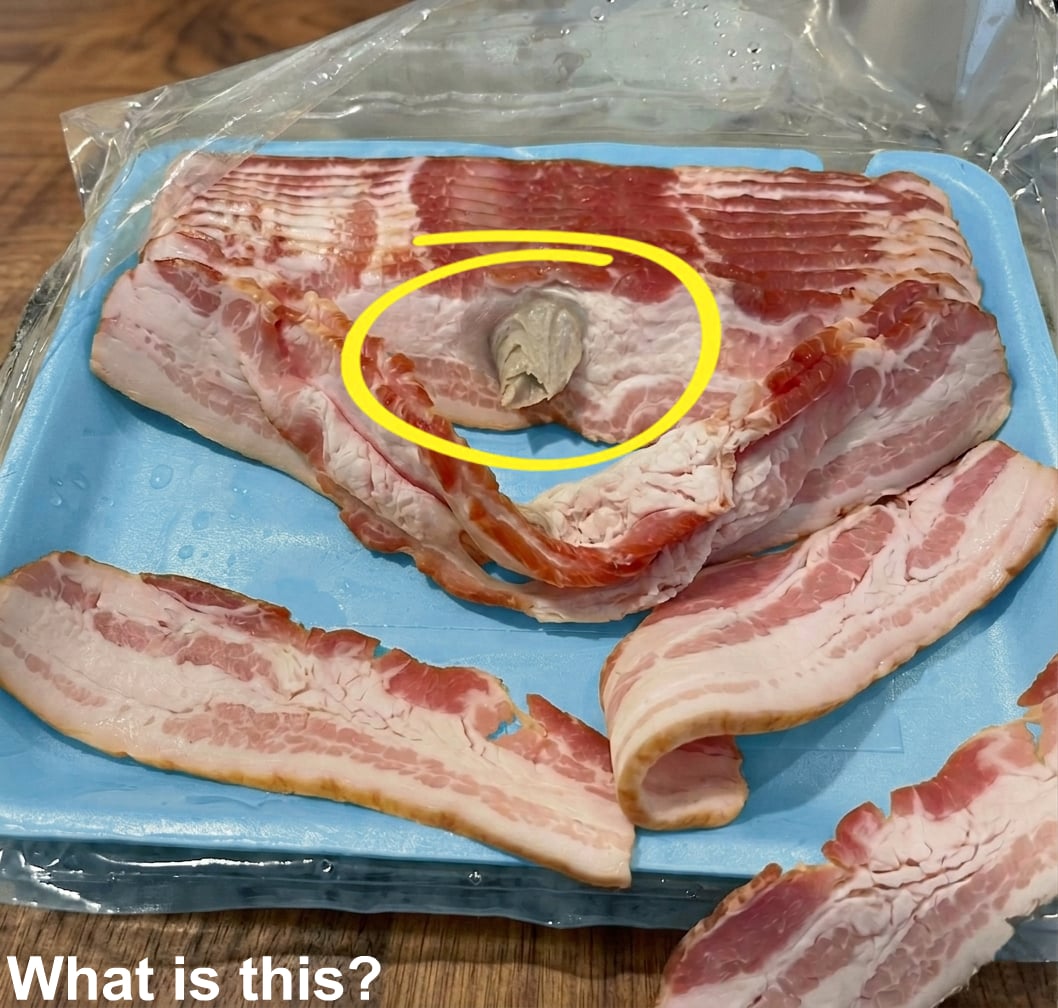
It’s not unusual for something unexpected in your food to trigger a strong reaction. In this case, a piece of bacon with an unusual texture and shape led to immediate concern—dense, rubbery, and oddly uniform. When something doesn’t match what you expect, your mind can quickly jump to worst-case scenarios, especially with all the stories surrounding food processing and contamination.
That reaction is natural, but taking a step back can help bring clarity. Many cuts of meat contain parts that aren’t always visible in neatly packaged products—such as connective tissue, cartilage, or fat that hasn’t fully rendered during cooking. These elements can look unfamiliar or even alarming if you’re not used to seeing them, but they’re typically harmless and part of the animal’s natural structure.
If you ever encounter something like this, a simple approach can help: compare it with reliable images, check the texture and smell, and consider the source of the product. If anything still feels off—such as an unusual odor or discoloration—it’s always safest to discard the food. When in doubt, trusting your instincts about food safety is the right call.
Moments like this also highlight a broader reality: most of us are used to food that’s been processed and presented in predictable ways. When something breaks that expectation, it can feel unsettling. Understanding that not all parts of food look “perfect” can make these situations less alarming—and help turn confusion into informed awareness.