
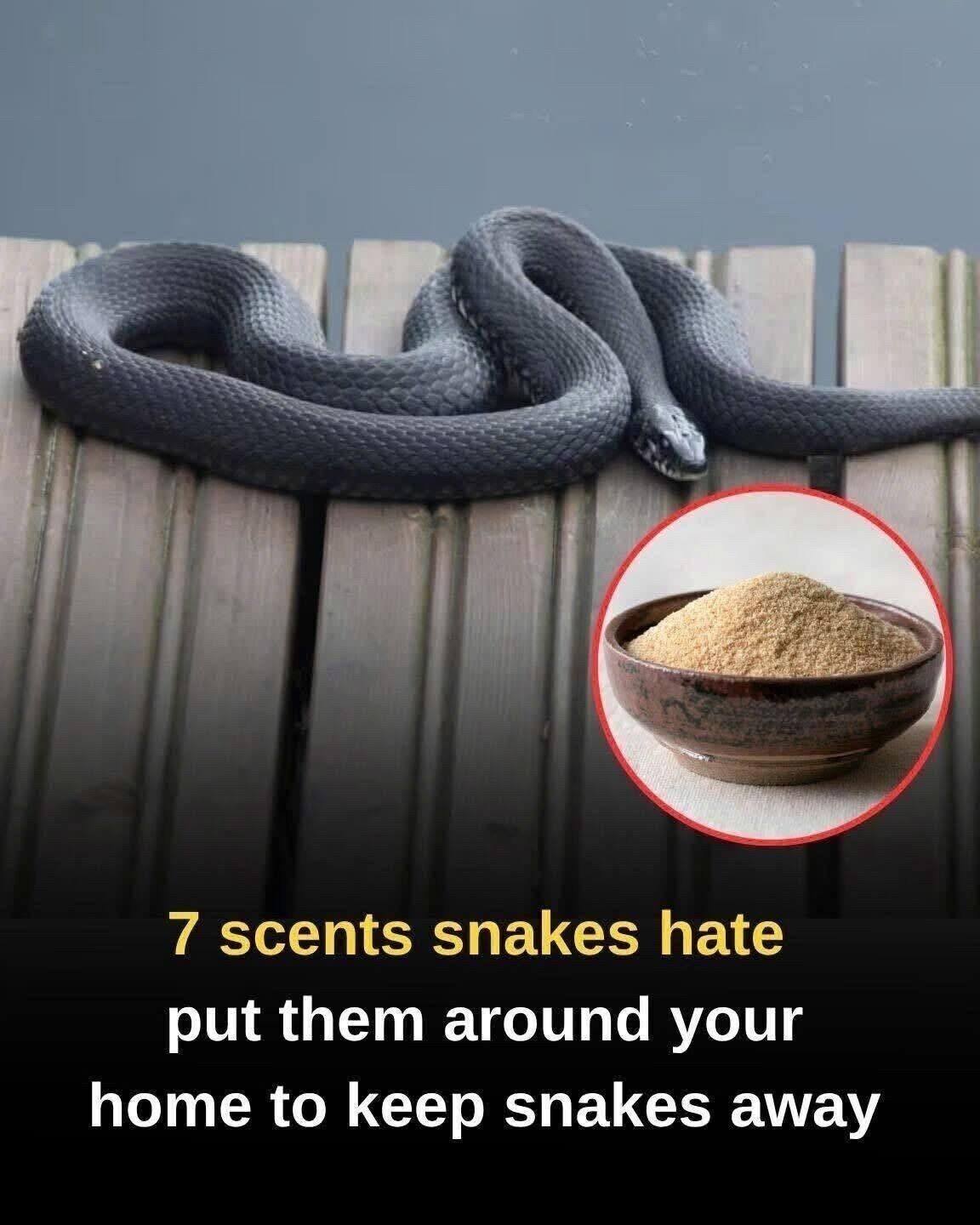
It’s true that snakes rely heavily on chemical cues to understand their environment, which is why strong odors can sometimes discourage them from lingering in certain areas. Substances like ammonia, vinegar, or concentrated oils such as cinnamon or clove may temporarily irritate their sensory system, making a spot less appealing. However, these effects are short-lived. Rain, wind, and time quickly reduce their strength, meaning they don’t offer reliable, long-term protection.
Some natural options—like garlic, onions, lemongrass, marigolds, or citronella—are often suggested as deterrents. In reality, their impact tends to be indirect. They may help mask scent trails or reduce the presence of insects and rodents that attract snakes in the first place. But it’s important to understand that no smell creates a permanent barrier. At best, these methods gently encourage snakes to move elsewhere for a while.
If you choose to use strong scents, safety matters. Products like ammonia should only be used outdoors and never in enclosed spaces, as the fumes can be harmful to people and pets. Essential oils should be diluted properly and applied sparingly around entry points, not directly into soil or water sources where they could cause unintended harm.
The most effective approach focuses on prevention rather than repelling. Sealing gaps around foundations, keeping grass trimmed, removing piles of wood or debris, and reducing standing water all make your property less inviting. Managing food sources—like rodents—is especially important, since snakes follow prey. When combined, these practical steps do far more than any scent alone, creating an environment where snakes are less likely to settle in the first place.