
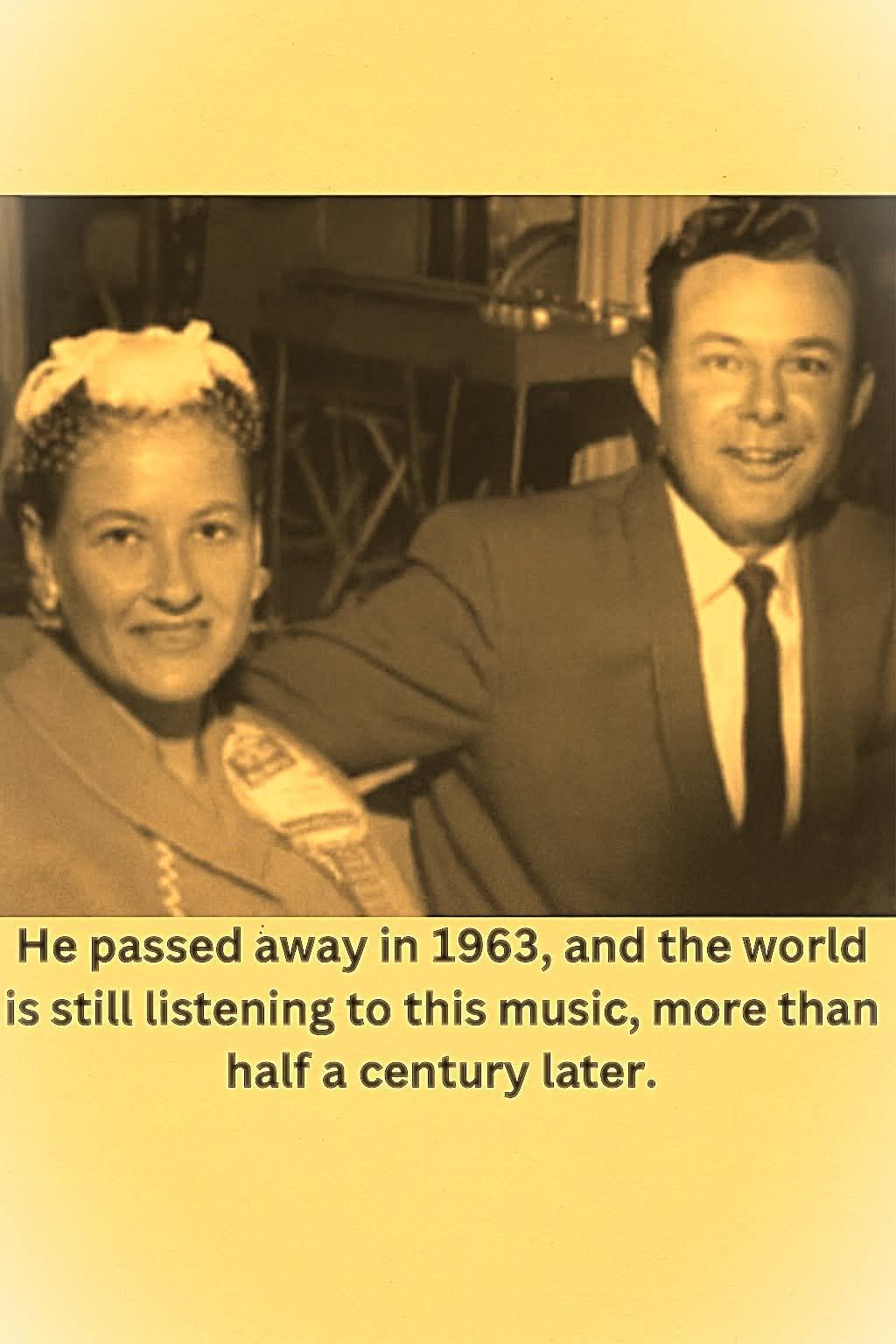
In 1960, a recording quietly reshaped the direction of country music while reaching listeners far beyond its traditional audience. He’ll Have to Go, performed by Jim Reeves, stood out during a time of change in the industry. Its soft delivery, minimal instrumentation, and emotional clarity offered something different—music that felt personal yet polished enough for mainstream radio.
The song’s origin is as intimate as its sound. Writers Joe Allison and Audrey Allison were inspired by a simple, real-life moment—overhearing a man speaking softly on the telephone, trying to reach someone he loved. That quiet exchange became the heart of the lyrics, built around longing, distance, and the hope of reconnecting. Instead of complex storytelling, the song leans on simplicity, allowing emotion to carry every line.
Behind the scenes, Chet Atkins helped shape the track with a production style that would become known as the “Nashville Sound.” This approach blended smooth arrangements with subtle backing instruments, moving away from the rougher edges of earlier country recordings. The result was a sound that felt refined and accessible, helping country music connect with a broader audience.
The impact was immediate and lasting. “He’ll Have to Go” topped country charts and crossed into pop success, marking a turning point in how country music could be produced and heard. Its legacy lives on as an example of how restraint, sincerity, and thoughtful production can create something timeless—proof that sometimes, the quietest songs leave the strongest impression.