
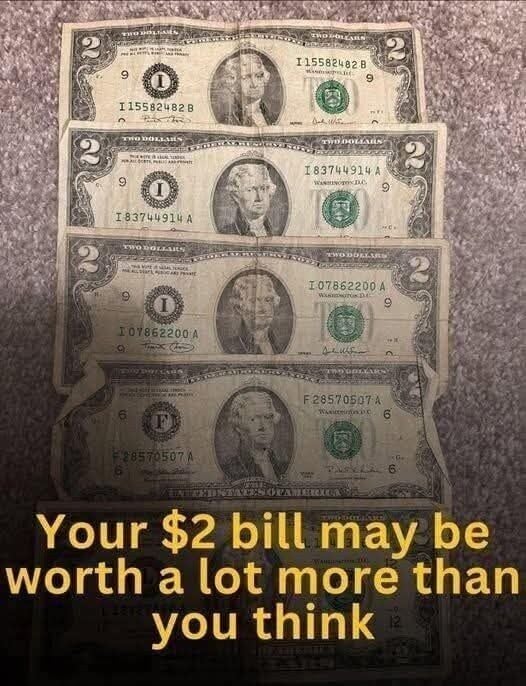
At first glance, a $2 bill might seem like nothing more than an uncommon piece of pocket change. But in the world of currency collecting, small details can make a surprising difference. The series year printed on the note, the color of the Treasury seal, and even subtle variations in printing can all influence value. Some collectors look specifically for unique serial numbers—low digits, repeating patterns, or palindromes—which can turn an ordinary bill into something far more interesting.
Condition plays an equally important role. A crisp, uncirculated $2 bill with sharp corners and no creases will always attract more attention than one that’s been folded and worn over time. Even minor imperfections like ink marks or fading can reduce its appeal. If you happen to come across a note that looks unusually well-preserved, it may be worth setting aside rather than spending.
Another factor to consider is rarity within certain print runs. Older series, limited print quantities, or unusual production quirks can increase demand among collectors. While most $2 bills remain close to their face value, a few stand out due to these subtle characteristics. As physical currency becomes less common in everyday transactions, notes like these can carry added historical and collectible interest.
Taking a closer look at the money in your wallet doesn’t guarantee you’ll find a hidden treasure—but it does make the ordinary a bit more intriguing. Sometimes, it’s not about striking it rich, but about recognizing that even everyday items can hold unexpected stories and, occasionally, a little extra worth.