
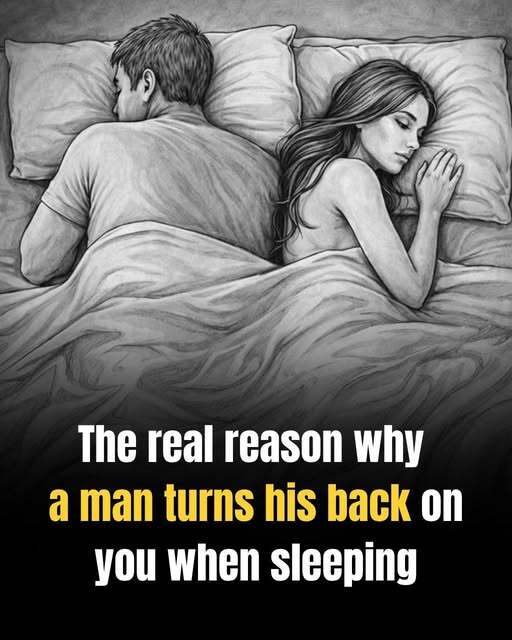
It’s easy to read meaning into small habits—especially in relationships. When a man turns his back while sleeping, it can feel like distance or disconnection. But in most cases, it’s far more about comfort than emotion. People naturally shift positions during sleep to relax their muscles, regulate body temperature, or reduce pressure on joints. Sleeping back-to-back can actually be a comfortable compromise—close enough to share space, but with enough room to rest properly.
Sleep itself plays a much bigger role than most people realize. Getting consistent, quality rest—usually around 7 to 9 hours—allows the body to repair, reset, and maintain balance. When sleep is disrupted or uncomfortable, the body instinctively looks for better positions. Turning away might simply be the body’s way of finding deeper rest, not a reflection of feelings.
Interestingly, sharing a bed with a partner can still have positive effects, even without constant physical contact. Many couples feel calmer just knowing someone is nearby. That sense of presence can reduce stress and support better sleep overall. Emotional closeness isn’t always about how you position your body—it’s often about the connection you carry into rest.
In the end, sleep positions are more about physical needs than relationship signals. What matters more is how partners connect while awake—through communication, support, and shared time. A turned back at night usually isn’t a message—it’s just the body settling into rest.