
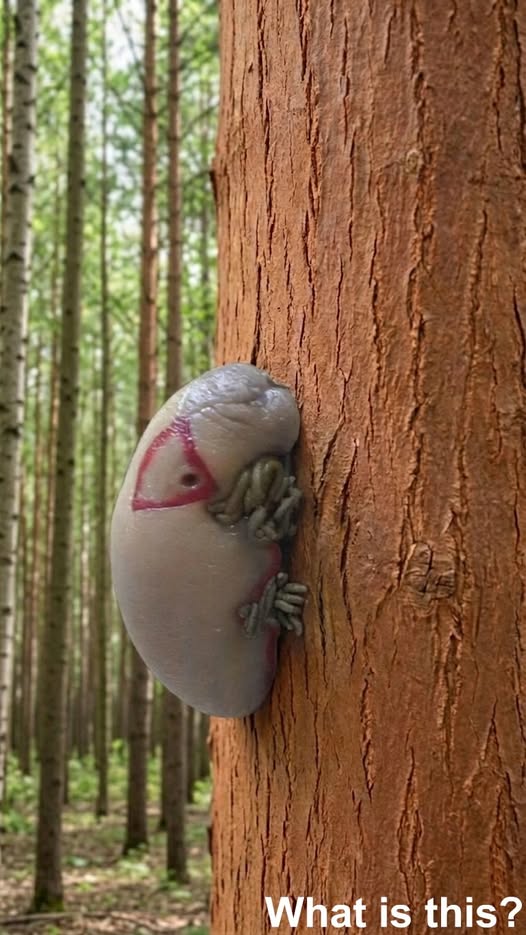
It started with a moment of unease—a strange, vivid red shape surrounded by unfamiliar textures, the kind of sight that makes you pause and look twice. A few cautious minutes, some zoomed-in photos, and a quick search later, the mystery unraveled. What seemed alarming at first turned out to be the Red Triangle Slug, a harmless species native to Australia’s east coast. With its striking triangular marking and almost surreal appearance, it’s easy to mistake it for something far more threatening than it actually is.
Once the initial surprise fades, curiosity tends to take over. These slugs thrive in damp, shaded environments—forests, gardens, and leaf-littered ground where moisture lingers. They spend much of their time tucked away under logs or debris, emerging when conditions are just right. Like many of their kind, they move slowly but efficiently, producing a thick mucus that helps them glide across surfaces and offers a layer of protection from predators and rough terrain.
Despite their unusual look, they quietly contribute to the balance of their ecosystem. By feeding on decaying plant matter, they play a role in breaking down organic material and recycling nutrients back into the soil. It’s a small job, but an essential one—part of the hidden processes that keep natural environments functioning smoothly.
What makes encounters like this memorable isn’t just identifying the creature—it’s the shift in perception that follows. Something that first triggers discomfort can quickly become a point of fascination. Moments like these are gentle reminders that the unfamiliar isn’t always something to fear. Often, it’s simply something waiting to be understood, revealing just how rich and surprising the natural world can be when we take a closer look.