
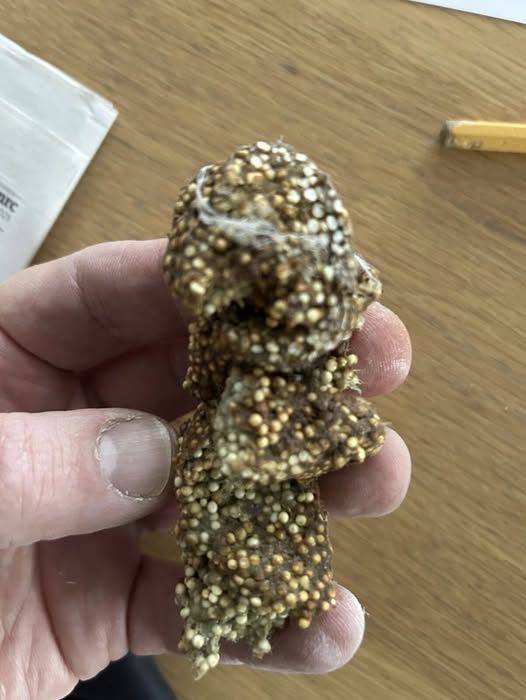
It began as one of those ordinary, almost forgettable tasks—reaching under a bookshelf to recover a missing LEGO piece from that familiar space where small things vanish. Expecting nothing more than dust and sharp plastic edges, the search took an unexpected turn. Instead of a toy, there was something else: dry, uneven, and strangely textured. For a moment, uncertainty crept in, the kind that turns a simple task into a pause filled with questions.
But the tension didn’t last. There was no unpleasant smell, no sign of anything concerning—just a faint trace of something oddly familiar. Then recognition clicked. It wasn’t anything mysterious at all, but a forgotten piece of Floam, that colorful, bead-filled putty that once defined hours of carefree play. A relic from another time, now dried and crumbling, but still carrying a quiet echo of what it used to be.
Holding it brought back more than just the memory of a toy. It reopened a feeling—afternoons without urgency, mornings shaped by cartoons, and the kind of creativity that didn’t need a purpose. When it was shown to a child of today, the reaction was simple curiosity, untouched by nostalgia. To them, it was just an object. To you, it was a bridge to a different pace of life.
In the end, the Floam was discarded. Some things aren’t meant to last in their physical form. But what remained was something less tangible and far more lasting—a reminder that joy doesn’t always come from complexity. Sometimes, it’s found in the smallest, most unexpected places, waiting quietly to be remembered.