
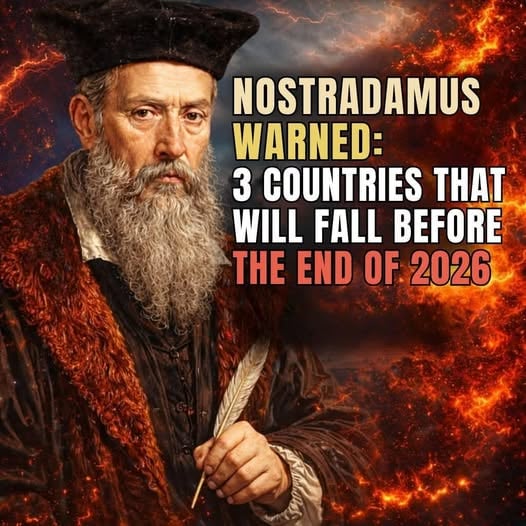
The enduring fascination with Nostradamus has never been about clear predictions—it’s about how his words seem to bend and adapt to the moment. His cryptic imagery, often referencing animals, shifting power, and uncertain futures, continues to draw attention because it feels open-ended. A “weakened eagle,” a “cornered bear,” or a “fading lion” can be interpreted in countless ways, especially in times when global uncertainty is already part of the conversation.
What gives these interpretations their force is not accuracy, but familiarity. People tend to see in them reflections of current tensions—questions about leadership, economic pressure, or national identity. Rather than offering a roadmap of what will happen, the verses function more like a lens, sharpening concerns that are already present. In that sense, they don’t predict anxiety—they amplify it.
At the same time, history shows that such cycles are not new. Nations have always experienced periods of strength, doubt, and transformation. Alliances shift, priorities evolve, and societies adapt in ways that are rarely linear or predictable. The language of prophecy may feel dramatic, but the underlying themes—change, uncertainty, resilience—are constant features of human history rather than signs of a fixed outcome.
Seen this way, the lasting appeal of Nostradamus lies less in foresight and more in reflection. His writings invite interpretation, but they don’t demand belief. Instead of pointing to an inevitable future, they highlight a simple truth: while circumstances may feel uncertain, the way people respond to them remains an open choice.