
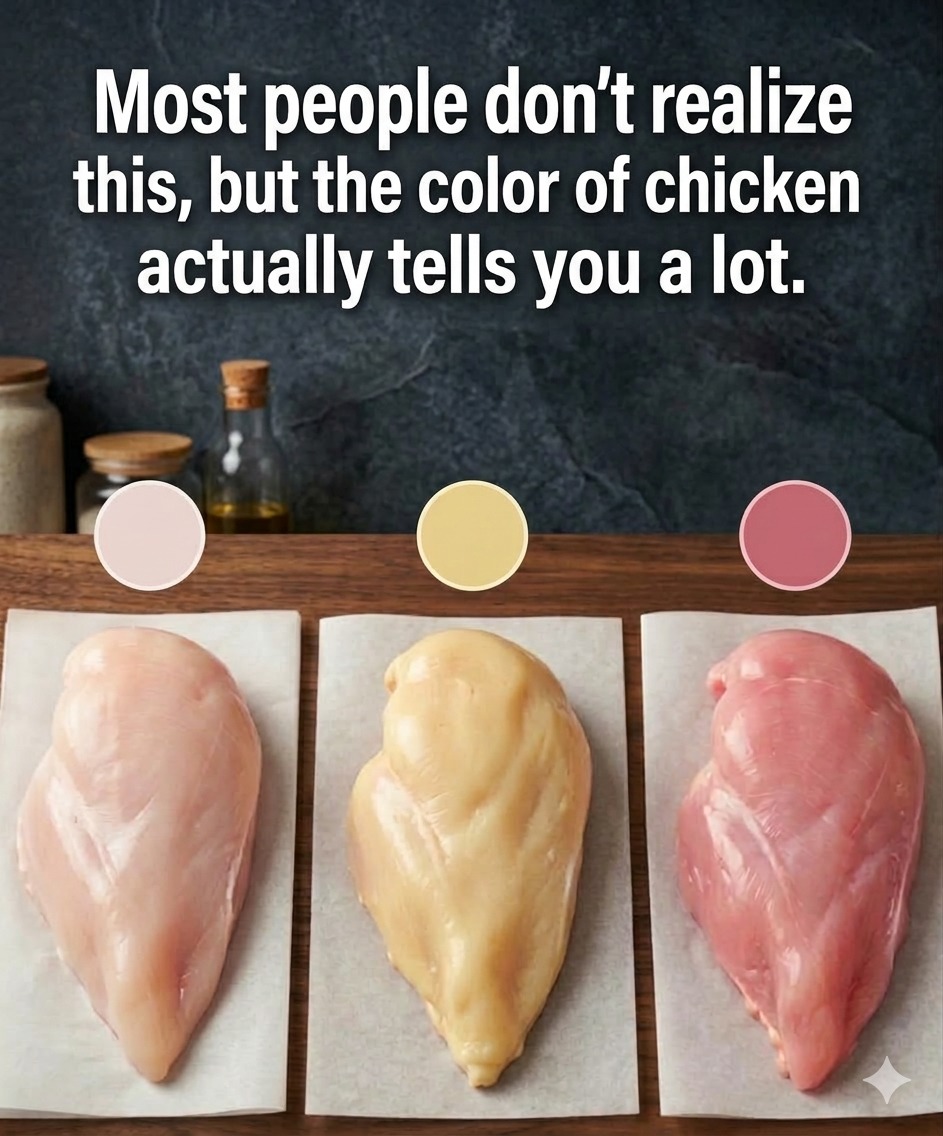
When you’re shopping for chicken, color is often the first thing you notice—and one of the easiest things to misinterpret. Some cuts look pale pink, others have a deeper yellow tone, and it’s tempting to assume one must be healthier or higher quality than the other. In reality, color alone doesn’t tell the full story. It can hint at how the bird was raised or what it was fed, but it isn’t a reliable measure of freshness, safety, or overall quality on its own.
Understanding what influences color is the first step. Pale chicken is commonly linked to large-scale indoor farming, where birds are raised on controlled diets and bred for efficiency. This doesn’t automatically make the meat unsafe, but it often results in a milder flavor and softer texture. On the other hand, a yellowish tint usually comes from chickens that consume pigment-rich foods like corn or plants, which can give the skin and fat a richer color. That difference is more about diet than quality—and importantly, it can sometimes be replicated through feed adjustments even in conventional systems.
That’s why it helps to look beyond appearance and focus on how the chicken was produced. Labels such as “organic,” “free-range,” or “pasture-raised” can offer better insight into the animal’s living conditions and diet. While these terms aren’t perfect, they generally point toward farming practices that allow for more natural movement and varied feeding, which can influence both taste and texture more meaningfully than color alone.
Finally, if your goal is quality and freshness, trust your senses more than your eyes. Fresh chicken should have a clean, neutral smell and a firm, slightly springy texture. If something feels off—sticky, overly soft, or sour—it’s best to avoid it. In the end, choosing chicken comes down to your priorities: whether that’s flavor, cost, or ethical sourcing. Color can be part of the picture, but it’s only one small piece of a much bigger story.