
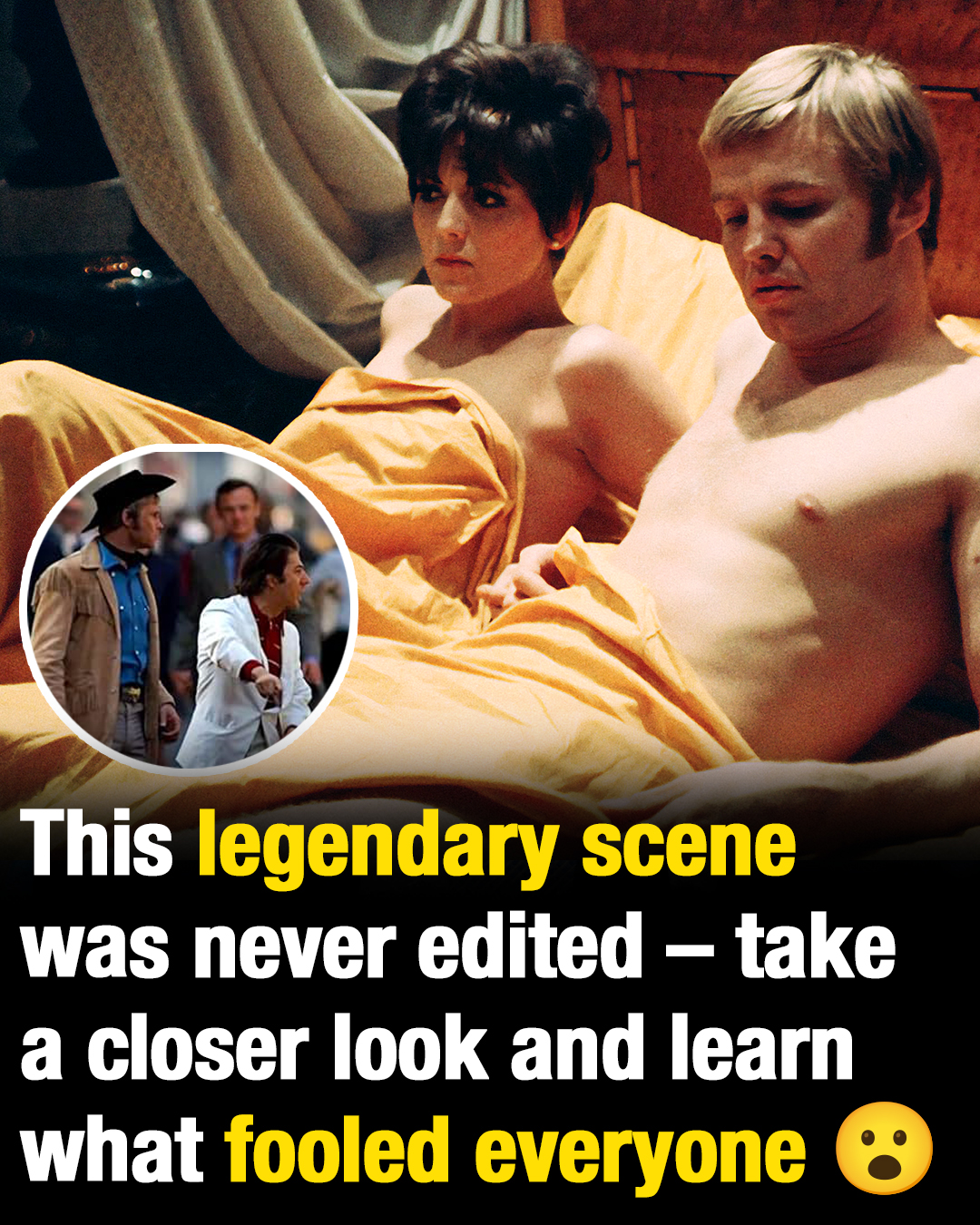
Few performances feel as lived-in as Dustin Hoffman’s portrayal of Ratso Rizzo in Midnight Cowboy. From the persistent limp—famously achieved by placing a stone in his shoe—to the rasping cough and fragile physicality, Hoffman built a character who seemed to be fading in real time. His commitment gave Ratso a raw authenticity that still defines the film’s emotional weight decades later.
Yet even in such a carefully crafted performance, attentive viewers have pointed to fleeting moments in the film’s final scene that feel slightly off. As Joe Buck, played by Jon Voight, realizes Ratso has died beside him on the bus, some claim to notice subtle movement—perhaps a faint rise of the chest, or a small twitch as Joe closes his friend’s eyes. These details are so minor they can easily go unnoticed, but for those who catch them, they spark curiosity about whether the illusion briefly falters.
Interpretations of these moments tend to split. Some see them as simple filmmaking imperfections—tiny continuity slips that happen even in the most carefully produced scenes. Others view them differently, suggesting that these almost imperceptible movements deepen the scene’s emotional ambiguity. In that reading, Ratso feels suspended in a fragile space between life and death, mirroring Joe’s unwillingness to let go.
Whatever the explanation, the power of the scene remains untouched. If anything, these small irregularities can make the moment feel more human, more immediate. Midnight Cowboy endures not because it is flawless, but because it is deeply felt—its rough edges and all, leaving behind an emotional impact that lingers long after the final frame.