
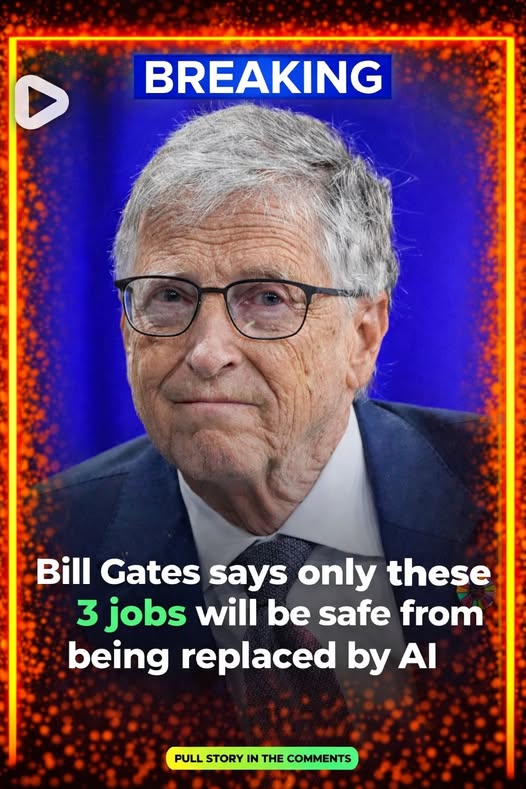
As artificial intelligence continues to reshape industries, Bill Gates has offered a perspective that feels both cautionary and forward-looking. He acknowledges that AI is likely to transform large portions of the workforce—from manufacturing and logistics to data-heavy office roles. Yet, in the middle of that disruption, he points to a few areas where human thinking still holds a clear edge.
According to his outlook, fields like biology, energy systems, and advanced software development rely on more than just processing power. These areas demand intuition, creativity, and complex judgment—qualities that are difficult to fully replicate with algorithms. Whether it’s understanding living systems, managing global energy challenges, or designing the frameworks that technology itself depends on, these roles require people who can navigate uncertainty and think beyond patterns.
Rather than framing these careers as simply “safe,” the idea is that they represent where human contribution remains essential. The future, in this view, isn’t about stepping away from technology, but learning how to work alongside it. AI can handle repetition and scale, but it still depends on human direction, curiosity, and decision-making to shape meaningful outcomes.
For individuals thinking about the years ahead, the takeaway is less about specific job titles and more about mindset. Adaptability, critical thinking, and a willingness to engage with complex problems are likely to matter more than ever. In a world increasingly influenced by AI, the most valuable skill may be the ability to ask better questions—especially the ones machines don’t yet know how to answer.