
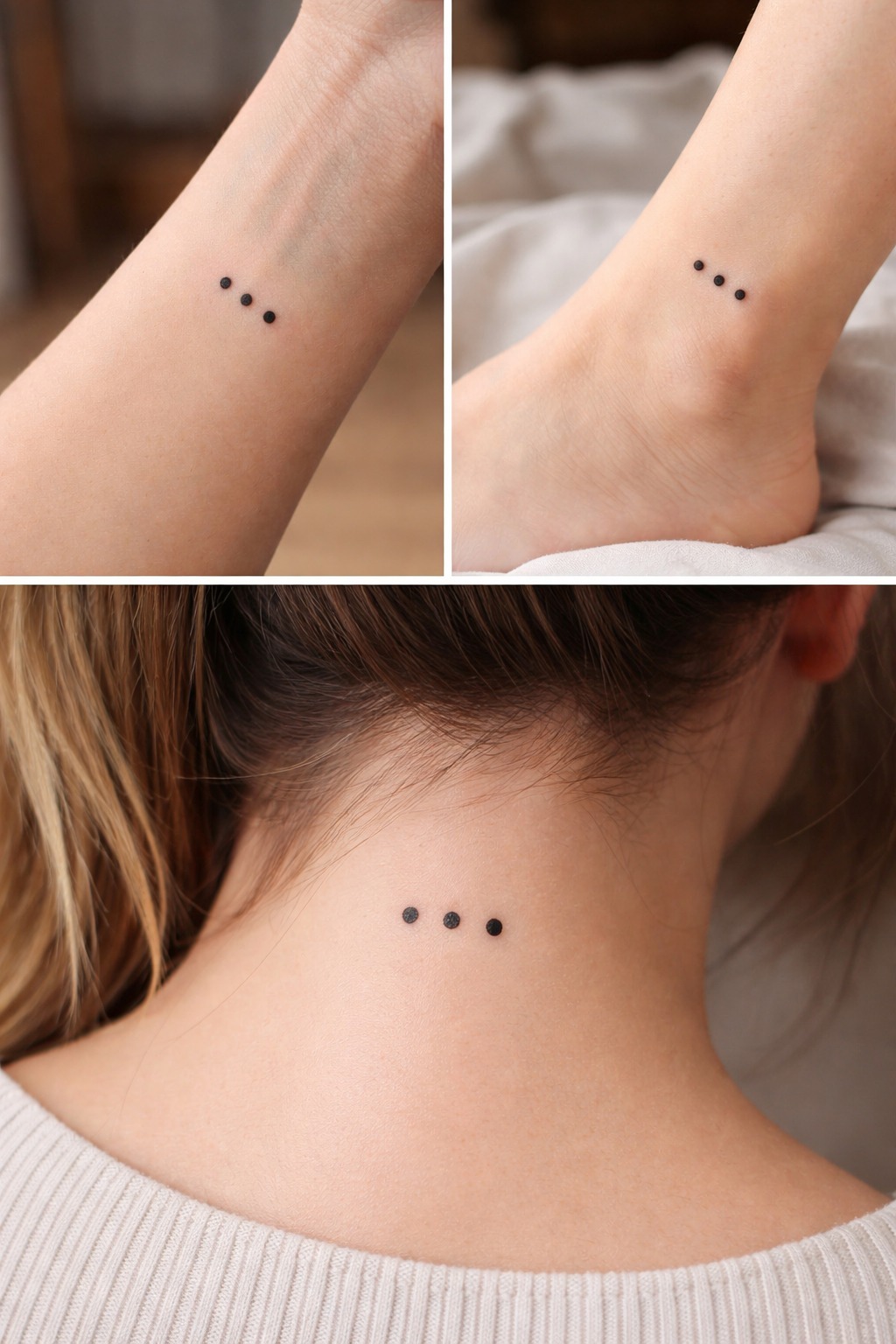
The three-dot tattoo may look simple, but it carries layers of meaning shaped by culture, context, and personal experience. Often placed on the hand—between the thumb and forefinger or along the knuckles—it is commonly associated with the idea of the “Three Wise Monkeys.” This interpretation reflects the principle of “see no evil, hear no evil, speak no evil,” symbolizing awareness, restraint, and a thoughtful approach to life.
In other settings, particularly within certain subcultures or institutional environments, the same three dots can represent loyalty, discretion, and trust. It may signal belonging to a shared mindset where respect and silence are valued. For some individuals, the tattoo evolves over time, with additional markings reflecting personal experiences or periods of hardship, turning a small design into a quiet record of one’s journey.
Across different regions, the meaning can shift even further. In parts of Latin America, the three-dot tattoo is often linked to the phrase “Mi Vida Loca,” or “my crazy life.” Here, it becomes a symbol of lived experience—sometimes tied to struggle, resilience, or a path shaped by difficult choices. Despite these variations, a common thread remains: the tattoo often reflects identity and personal history rather than a single universal definition.
At the same time, visible symbols like this can be interpreted differently depending on the environment. In some situations, they may lead to assumptions or misunderstandings, especially when their meaning isn’t clear. That’s what makes the three-dot tattoo so intriguing—it reminds us that even the smallest symbols can carry complex stories, and that meaning is often shaped as much by perspective as by intention.