
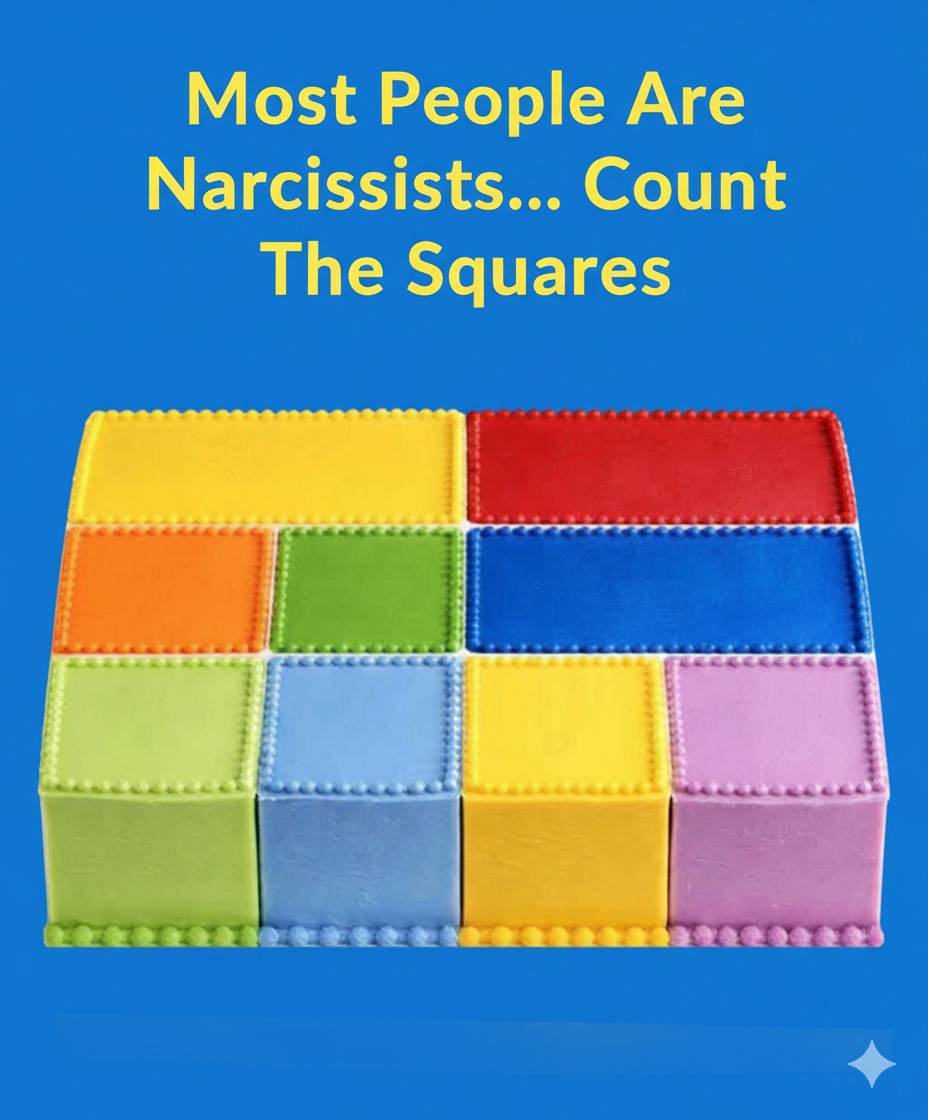
At first glance, a “count the squares” puzzle looks almost too easy to take seriously. A neat arrangement of blocks invites a quick tally, and many people assume the answer will come instantly. But the moment you slow down and actually count, the simplicity fades. Some squares are obvious, while others are tucked into angles, partially hidden, or overlapping in ways that challenge your first impression. What seemed like a quick visual task turns into a test of attention and careful observation.
What makes these puzzles engaging is that they rely less on math and more on perception. The squares you see immediately—usually the ones facing upward—are only part of the picture. Others appear only when you shift your focus or reconsider how the shapes connect. Some people even visualize unseen layers to build a mental 3D model. That’s why different answers often emerge, each based on how the viewer interprets what counts as “visible.” The variation isn’t necessarily about right or wrong—it reflects how differently our brains process the same image.
Interestingly, the reactions these puzzles generate can be just as revealing as the answers themselves. Bold claims like “most people get this wrong” or “only a few can solve it” tend to trigger defensiveness instead of curiosity. Comment sections quickly turn into debates, where people defend their answers rather than re-examining them. This is where cognitive habits come into play—things like confirmation bias, selective attention, and anchoring can shape not only how we see the puzzle, but how we respond to being challenged.
In the end, the real value of these puzzles isn’t the final number—it’s the process. They remind us that perspective matters, that careful thinking beats quick assumptions, and that clarity often requires stepping back and looking again. Whether solving a visual puzzle or navigating everyday decisions, the same principles apply: define your approach, stay open to other viewpoints, and take the time to truly see what’s in front of you.