
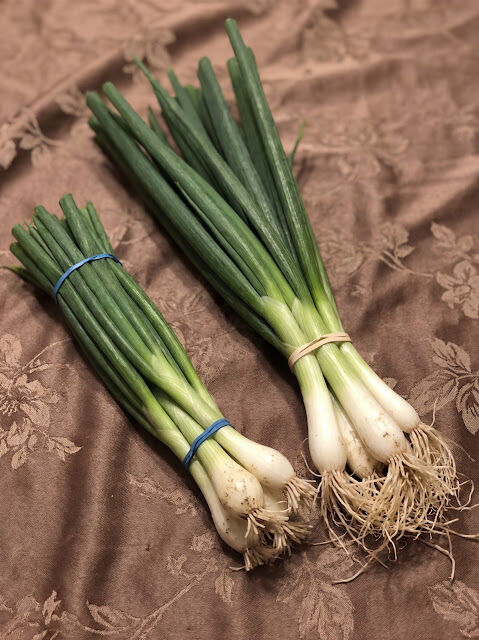
At first glance, these greens can look nearly identical in the produce aisle—but knowing the differences can quietly upgrade your cooking. Each brings a slightly different flavor, texture, and purpose to a dish. Once you understand what sets them apart, you can stop guessing and start choosing the ingredient that actually fits what you’re making.
Green onions and scallions are, in fact, the same thing. They’re harvested early, before a bulb has time to develop, which is why they have that slim white base and long, hollow green tops. Their flavor is light and fresh, with just a hint of sharpness. You can use the whole plant—the white part adds a bit more punch, while the green tops are softer and ideal for garnishing. They work beautifully both raw and lightly cooked, making them a go-to for salads, eggs, soups, and quick stir-fries.
Spring onions take things a step further in maturity. They have a small, rounded bulb at the base, which gives them a fuller, sweeter onion flavor—closer to a mild yellow or red onion. That bulb makes them especially good for grilling or roasting whole, where they develop a rich, slightly caramelized taste. At the same time, their green tops are still usable, so you get versatility in a single ingredient.
Chives, on the other hand, belong in a different category altogether. They’re an herb, not a vegetable, with thin, solid stems and no bulb. Their flavor is much more delicate—subtle, fresh, and never overpowering. Because of that, they’re best used raw or added at the very end of cooking. A sprinkle over potatoes, eggs, soups, or creamy dips brings just enough onion flavor to lift a dish without dominating it.