
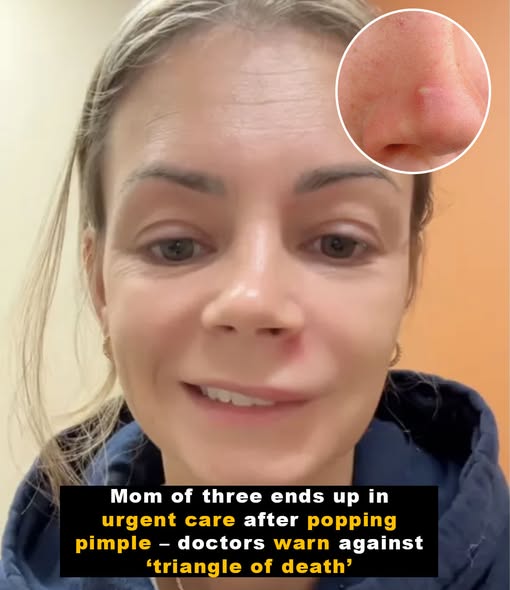
Dermatologists often point to a small but important area of the face—commonly called the “triangle of death”—that runs from the bridge of the nose down to the corners of the mouth. While the name sounds dramatic, it reflects a real anatomical concern. Veins in this region are more directly connected to deeper pathways that can, in rare situations, allow infection to travel toward the brain. That’s why something as routine as squeezing a pimple here isn’t always as harmless as it seems.
In most cases, skin blemishes resolve on their own without complications. But when the skin barrier is broken—especially through picking or popping—bacteria can be pushed deeper into the tissue. If an infection develops, it may escalate beyond a simple surface issue. Warning signs include increasing redness, swelling, warmth, throbbing pain, or even fever. These symptoms don’t mean something serious will always happen, but they do signal that the body may be struggling to contain the problem.
A safer approach is to treat breakouts gently and consistently. Keeping the area clean, using appropriate over-the-counter treatments, and avoiding unnecessary irritation can help the skin heal naturally. It may take a little longer than popping a blemish, but it significantly reduces the risk of complications. For persistent or painful spots, consulting a healthcare professional can provide targeted treatment without adding risk.
Ultimately, the takeaway isn’t to fear every pimple, but to be mindful of how you handle them—especially in sensitive areas of the face. Paying attention to changes and acting early if something feels off can keep a minor issue from becoming something more serious. A little patience and care go a long way in protecting both your skin and your overall health.