
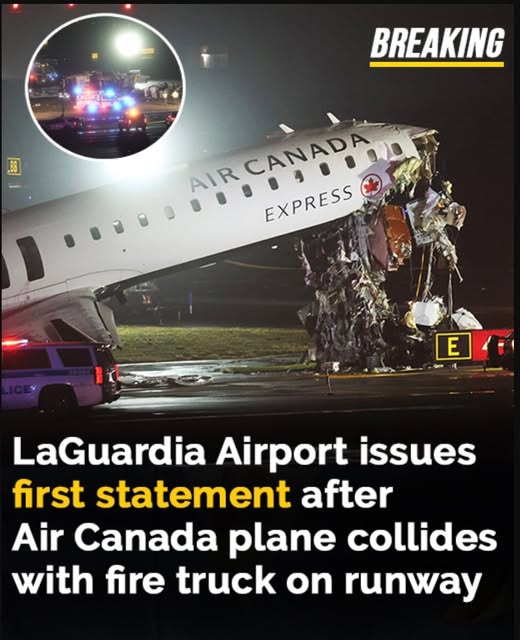
In the span of a few moments, what should have been a routine arrival from Montreal turned into a devastating collision on Runway 4 at LaGuardia Airport. An Air Canada Express aircraft, moving at low taxi speed, collided with a fire truck that had entered the same runway space. Air traffic controllers reportedly issued urgent calls for the vehicle to stop, but the timing left no margin for recovery. The impact claimed the lives of two pilots and left dozens of passengers and emergency personnel injured, transforming an ordinary night into one marked by loss and shock.
In the aftermath, the airport became the center of an intense response effort. Flights were halted, operations disrupted, and emergency teams worked through the night to assist the injured and secure the scene. For those on board and those responding on the ground, the incident unfolded without warning—an abrupt convergence of events that few could have anticipated or avoided in the moment.
Attention has now shifted to understanding how such a breakdown could occur in one of the world’s most tightly controlled aviation environments. Investigators from the National Transportation Safety Board will examine every layer of the event, from air traffic control communications to ground vehicle clearances and operational procedures. The central question is not just what happened, but why established safeguards failed to prevent two authorized movements from occupying the same space at the same time.
For families, survivors, and the broader public, answers will not undo what has been lost. Still, accountability and clarity remain essential. Aviation safety has long advanced through careful investigation of rare but serious incidents, and this case will be no exception. The hope now is that the lessons drawn—however difficult—will lead to stronger systems and fewer risks, ensuring that tragedies like this become even less likely in the future.