
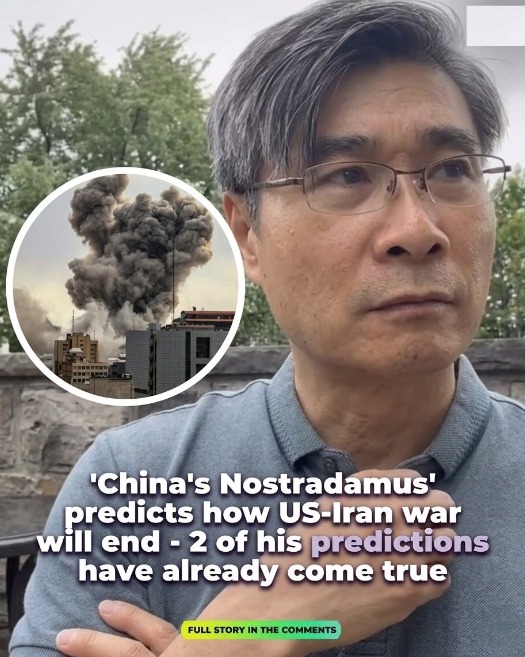
Professor Xueqin Jiang, a Chinese-Canadian educator and analyst, has built a growing audience by approaching international affairs with a focus on context rather than conjecture. Through his online educational content, he explores global developments using historical research, geopolitical patterns, and strategic reasoning. His work stands out for its emphasis on explanation over prediction, helping viewers understand how past decisions and long-term trends influence present-day outcomes.
His rise in visibility followed a 2024 lecture in Beijing, where he outlined key shifts in international relations and discussed how historical precedents can inform expectations about the future. Rather than presenting fixed forecasts, Jiang framed his analysis around recurring patterns—how nations respond to pressure, form alliances, and adapt to uncertainty. This approach encourages audiences to see global events not as isolated incidents, but as part of a broader continuum shaped by policy, strategy, and timing.
A central theme in Jiang’s work is preparation. He often examines how governments anticipate challenges, weigh risks, and develop strategies in response to evolving conditions. By breaking down these processes, he highlights the importance of understanding why decisions are made, not just what decisions are made. His analysis draws attention to the interplay between leadership, historical memory, and strategic priorities, offering a more layered perspective on international affairs.
Beyond individual case studies, Jiang’s broader contribution lies in promoting critical thinking. His work invites audiences to engage with global issues more thoughtfully—evaluating sources, recognizing patterns, and considering multiple perspectives. In doing so, he provides an accessible entry point into complex topics while maintaining a grounded, educational tone. The result is a body of work that informs without sensationalizing, helping viewers navigate an increasingly interconnected world with greater clarity.