
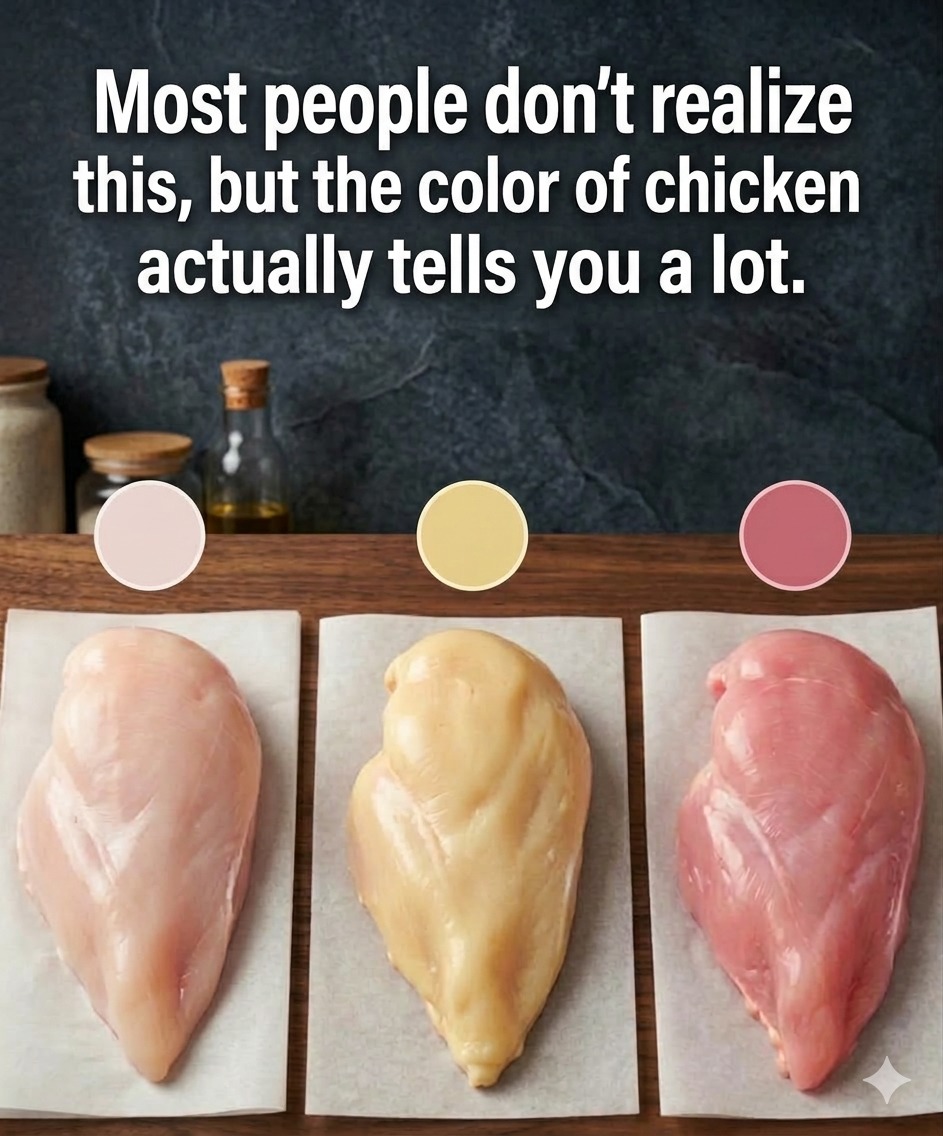
When you’re standing at the grocery store deciding which chicken to buy, color is often the first thing you notice. Some cuts look pale and almost pink, while others have a richer yellow tone that feels more “natural.” It’s easy to assume one is healthier or fresher than the other, but the truth is a bit more nuanced. Color can offer clues—but on its own, it doesn’t tell the full story about quality, safety, or nutrition.
Much of the difference comes down to what the chicken was fed and how it was raised. Paler meat is commonly found in conventionally raised chickens, which are typically fed a controlled diet and raised in indoor environments designed for efficiency. Yellow-toned chicken, on the other hand, often comes from birds whose diets include corn or other pigment-rich foods. That deeper color can suggest a different feeding approach, but it doesn’t automatically mean the chicken is fresher or better in every sense.
It’s also worth knowing that color can be influenced intentionally. Some producers adjust feed to enhance the yellow appearance, even in large-scale farming systems. That means a golden hue isn’t always a guarantee of more natural or higher-quality conditions. In other words, what looks appealing at first glance can sometimes be more about presentation than substance.
If you want to make a more informed choice, it helps to look beyond color. Labels like “organic,” “free-range,” or “pasture-raised” can give better insight into how the chicken was produced. Freshness is also key—look for meat that feels firm and has a mild, neutral smell. In the end, the best option depends on what matters most to you, whether that’s taste, cost, or how the food was sourced.