
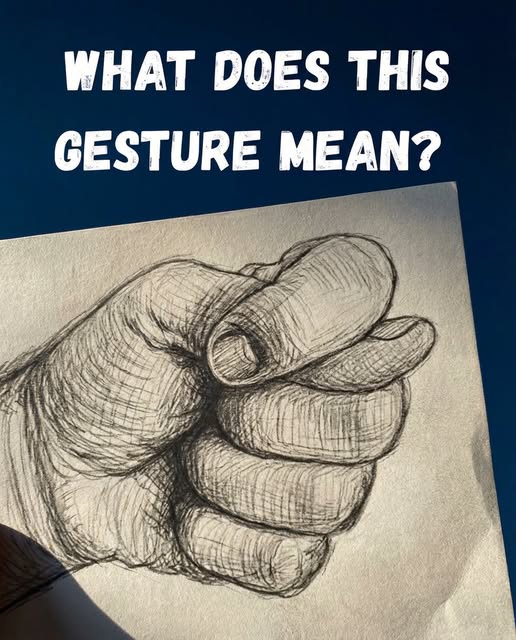
At first glance, it appears to be nothing more than a closed fist. But a second look reveals the real message: the thumb pressed firmly between the fingers, forming the old-world gesture known as the “fig.” Long before people relied on screens, shortcuts, and instant replies, this tiny movement carried a surprisingly sharp meaning. It could dismiss a demand, push back against pressure, or deliver a wry refusal—all without a single spoken word.
In many parts of 19th-century Europe, the gesture became a discreet form of resistance. It offered people a way to reject authority or unfair expectations without turning a moment into open conflict. Instead of loud arguments, a hidden thumb did the work of quiet rebellion. The fist suggested firmness, while the tucked thumb was often linked to protection, luck, and warding off harm, giving the sign both practical and symbolic power.
As time passed, the gesture moved beyond public defiance and into everyday family life. Older generations shared it with children as a playful but meaningful signal—something between a joke, a boundary, and a lesson in standing your ground. In some homes, it became part of small emotional rituals, used to comfort, encourage, or lighten tense moments with a touch of humor. What made it memorable was not only its meaning, but the warmth and cleverness with which it was passed on.
Today, the fig gesture has nearly disappeared, edged out by emojis, text replies, and the fast language of the internet. Even so, it remains a striking reminder that people once communicated refusal, courage, and personality through the smallest physical details. Its legacy is proof that subtle gestures can say far more than noise ever could—and that wit, restraint, and expression have always gone hand in hand.