
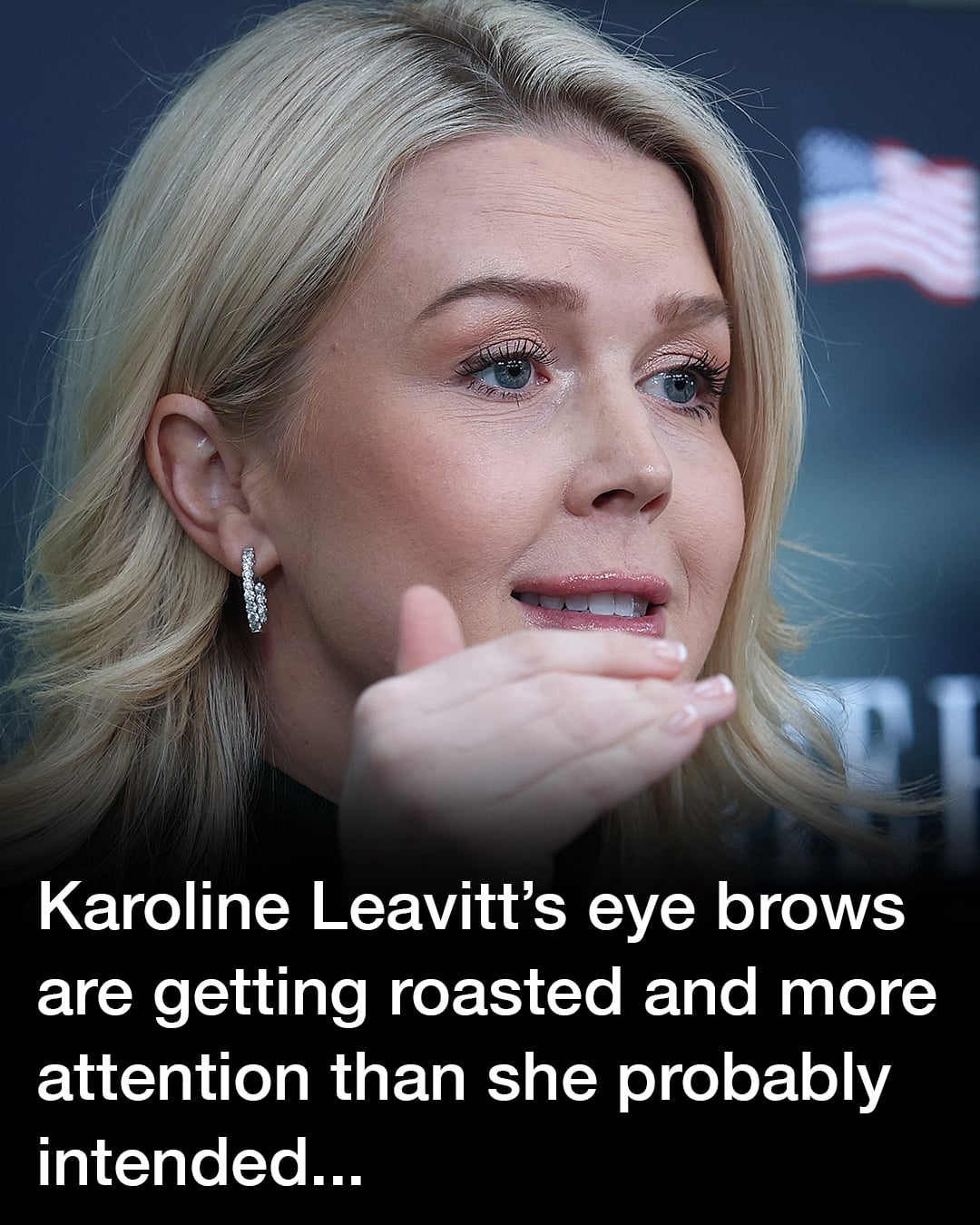
On paper, Karoline Leavitt represents a familiar modern political narrative: youth, ambition, and rapid ascent in a high-stakes arena. Her trajectory reflects generational change and the evolving face of political communication. Yet in recent weeks, much of the online conversation has drifted away from policy positions or strategy. Instead, social media threads have zeroed in on her eyebrows — dissecting their shape and styling with the intensity typically reserved for legislative debate.
At first glance, the commentary may seem like harmless internet humor, the kind of trend that cycles quickly through platforms like TikTok and Reddit. But beneath the jokes lies a recurring dynamic in public life: when a woman steps into power, her appearance often becomes part of the critique. Hair, makeup, wardrobe — details that rarely define male counterparts — can dominate the narrative, subtly reframing authority through an aesthetic lens.
The phrase “eyebrow blindness,” frequently used online to mock perceived beauty missteps, illustrates how easily style becomes shorthand for substance. For critics who already oppose a public figure’s politics, appearance can morph into a convenient extension of disagreement. The conversation shifts from ideas to image, from policy to presentation. You don’t have to share Leavitt’s views to recognize the broader pattern at play.
Ultimately, the debate isn’t truly about grooming trends. It’s about why visual scrutiny continues to overshadow professional credentials for women in public life. When appearance becomes the headline, it narrows the space for meaningful dialogue. The more pressing question isn’t whether her eyebrows are flattering — it’s why, in an era defined by complex political challenges, a woman’s face still competes with her voice for center stage.