
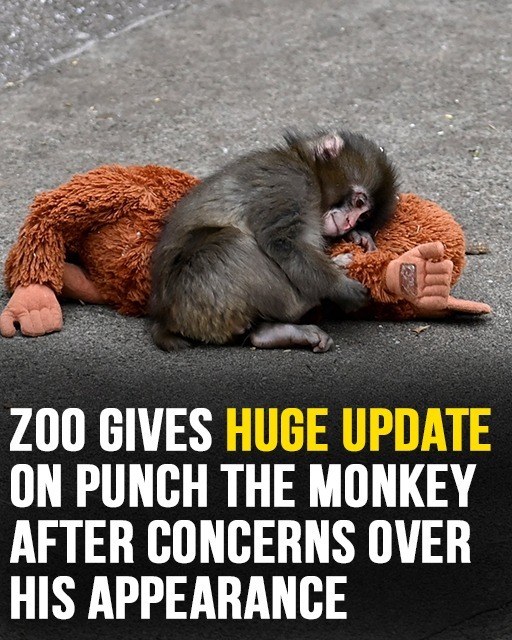
When news first surfaced about Punch, a newborn Japanese macaque facing an uncertain beginning, the response was immediate and heartfelt. Born on July 26, 2025, he was rejected by his mother within hours — a critical challenge for a species that relies deeply on maternal bonding. For caretakers, the priority was clear: step in swiftly, stabilize his health, and recreate as much comfort and structure as possible. Around-the-clock neonatal care, bottle feeding, and carefully planned enrichment became the foundation of his early days, demonstrating how expert intervention can give vulnerable wildlife a second chance.
To ease stress and encourage emotional security, caregivers introduced soft objects into his space — a common enrichment strategy in animal care. Punch gravitated toward a plush orangutan toy, clutching it tightly during rest and quiet moments. Images of the tiny macaque holding his stuffed companion spread widely online, inspiring waves of empathy from viewers across the globe. While the photos were undeniably touching, they also sparked broader conversations about wildlife care, rehabilitation ethics, and the delicate balance between human support and natural development.
As Punch grew stronger, the next phase began: social integration. In mid-February, a video clip showing an adult macaque pulling him triggered concern among some viewers who feared aggression. However, animal behavior specialists clarified that such interactions can reflect normal troop hierarchy dynamics. In macaque societies, social learning often involves firm — though typically non-harmful — boundary-setting. Rather than isolating him, staff carefully supervised gradual introductions, understanding that long-term well-being depends on building stable social bonds within the group.
By February 23, encouraging progress was evident. Punch was observed playing with young macaques, feeding on his own, and entering shared spaces without clinging to his human caregivers. In a particularly meaningful milestone, he began interacting confidently without relying on his plush toy — a quiet but powerful sign of growing independence. The zoo also addressed questions about minor hair thinning and habitat conditions, reassuring the public that seasonal coat changes are normal and that veterinary assessments confirm his health remains stable. Step by step, Punch’s journey reflects resilience, thoughtful care, and the steady confidence that comes from patient support.