
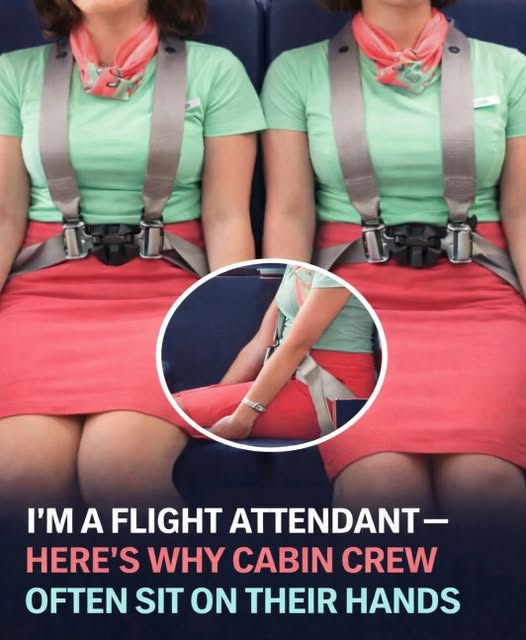
If you’ve ever glanced at a flight attendant during takeoff or landing and noticed them sitting upright with their hands tucked under their thighs, you’re not alone. At first glance, the posture can seem unusual — almost uncomfortable. But it’s not random, and it’s certainly not about convenience. That position is a carefully trained safety technique designed to protect crew members and ensure they can respond instantly if an emergency occurs.
Takeoff and landing are widely considered the most critical phases of any flight. During these moments, the possibility of turbulence, abrupt stops, or unexpected events is higher than at cruising altitude. For that reason, cabin crew members are trained to assume a specific brace position in their jump seats. This includes sitting straight with the spine aligned, both feet flat on the floor, shoulders back, and hands placed palms-up beneath the thighs. Every element of this stance serves a purpose rooted in aviation safety protocols.
Placing the hands under the thighs helps stabilize the arms and prevents them from flailing forward in the event of sudden impact or forceful movement. By limiting limb motion, the risk of fractures or joint injuries is reduced. The upright posture also supports spinal alignment and distributes force more evenly if a hard landing occurs. The goal is simple but critical: minimize injury so crew members remain physically capable of guiding passengers, opening exits, or performing emergency procedures within seconds.
Beyond the physical benefits, this position reinforces mental readiness. During takeoff and landing, flight attendants are trained to remain alert — scanning the cabin, listening for irregular sounds, and mentally reviewing emergency commands. While passengers are typically instructed to lean forward and protect their heads in a brace position, crew members must stay upright so they can move immediately after impact if needed. So the next time you see that composed, hands-tucked posture, you’ll know it represents preparation, discipline, and a commitment to passenger safety — not habit, but highly intentional training.