
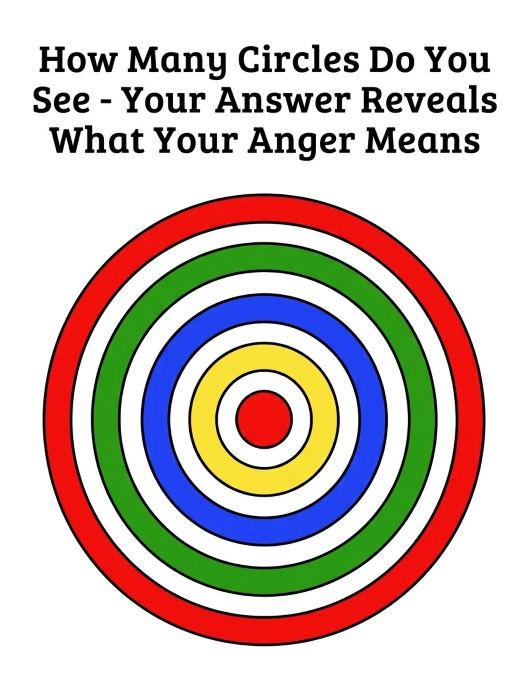
At first glance, a “count the circles” image looks like an easy scroll-by—until you actually try it. These colorful optical illusions keep popping up online because they’re quick, playful, and weirdly addictive. Some posts even add a lighthearted twist, claiming your total “reveals your personality.” It’s not meant to be taken seriously, but it does make people lean in, zoom closer, and feel compelled to see what everyone else is talking about.
The reason people get different answers is simple: our brains don’t all scan visual information the same way. Some of us notice large shapes and patterns first, while others immediately pick up tiny details tucked into corners. That means two people can stare at the same image and walk away convinced they’re right—because they genuinely saw different things. The illusion isn’t just a trick; it’s a reminder of how perception works.
If you want to count more accurately, slow down and use a method instead of guessing. Start by scanning the image left to right in rows, then repeat in the opposite direction. Zoom in and check areas where colors overlap, because that’s where “hidden” circles often sit. Decide what counts before you start—full circles only, or partial ones too? Most of the arguments happen because people don’t agree on that rule, not because someone “can’t count.”
The best part of these puzzles isn’t the final number—it’s the little reset they give your brain. They create a moment of curiosity in a feed that’s usually too serious or too fast. And because they’re easy to share, they turn into instant conversation starters: recounting, laughing, debating what counts, and comparing results with friends. So the next time one shows up, don’t rush—look twice, zoom in, and enjoy the surprise of what your eyes missed the first time.