
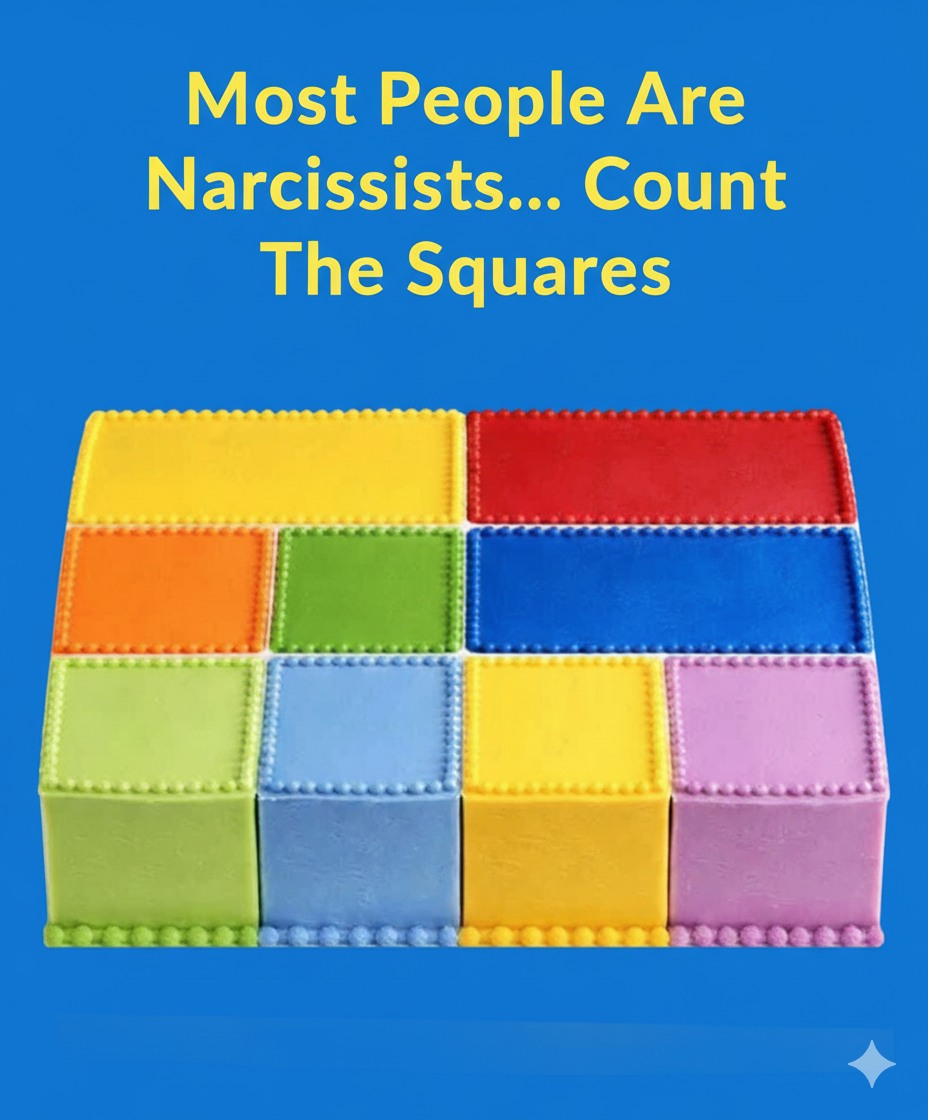
At first glance, a “count the squares” puzzle feels effortless. A neat arrangement of geometric blocks invites you to tally the shapes, and it’s tempting to assume a quick scan will deliver the answer. But once you slow down and begin counting carefully, the simplicity fades. Some squares stand out immediately, while others overlap, share edges, or sit partially concealed. What looked obvious becomes layered, requiring a more thoughtful approach.
These puzzles test perception more than mathematics. The top-facing shapes are easy to spot, but side angles and partially visible surfaces demand closer inspection. Some people count only what they can directly see, while others mentally reconstruct hidden layers, imagining the structure in three dimensions. The result? Multiple answers—and lively debate. The variation isn’t about intelligence; it reflects how differently our brains filter visual information. Expectations, focus, and past experiences all influence what we notice first.
Interestingly, the conversation around these puzzles often becomes more intense than the puzzle itself. Captions that challenge viewers—suggesting only certain people will “get it right”—can trigger pride or defensiveness. Instead of curiosity, discussions sometimes turn competitive. This reaction reveals familiar cognitive tendencies: confirmation bias, anchoring on an early guess, or overlooking details that contradict our first impression. The exercise becomes less about squares and more about how we respond when our assumptions are tested.
In the end, the true value of the puzzle isn’t the final number. It’s the reminder that perspective matters. Clear definitions, patience, and openness to alternative interpretations lead to better reasoning—not just in visual games, but in everyday decisions. When we pause, examine from multiple angles, and stay curious rather than defensive, we sharpen more than our counting skills—we strengthen our ability to navigate complexity with clarity.