
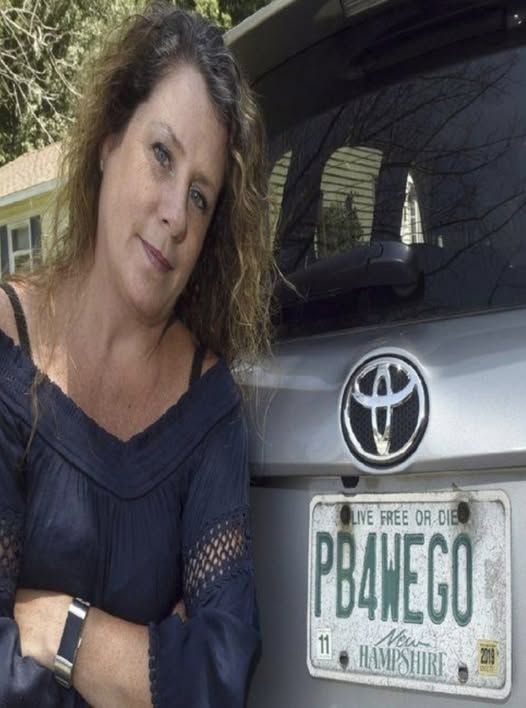
For fifteen years, Wendy Auger’s personalized license plate—“PB4WEGO”—was a small but cheerful part of her daily life. The phrase, shorthand for the familiar “pee before we go,” struck many drivers as a playful nod to family road trips. Children giggled, adults recognized the humor, and the plate quietly became part of her identity on the roadways of New Hampshire.
That changed when the New Hampshire Department of Motor Vehicles informed her that the plate now violated updated state guidelines and would need to be surrendered. After more than a decade of approval, the reversal came as a surprise. Wendy expressed confusion over why something long deemed acceptable was suddenly considered problematic. To her, the message reflected everyday parenting humor—not something intended to offend or provoke.
The decision sparked conversation beyond her own experience. Supporters argued that the phrase was widely understood as lighthearted and harmless. Others pointed to the broader issue of consistency in how personalized plates are evaluated and reevaluated. When guidelines evolve, drivers can be left wondering how interpretations shift over time—and why long-standing approvals may be reconsidered.
While final determinations rest with state officials, the situation opened a wider discussion about personal expression and public standards. Personalized plates often carry sentimental or humorous meaning for their owners. Wendy’s story serves as a reminder that even small details—like a few letters on a plate—can hold significance, spark dialogue, and reveal how interpretations can change with time.