
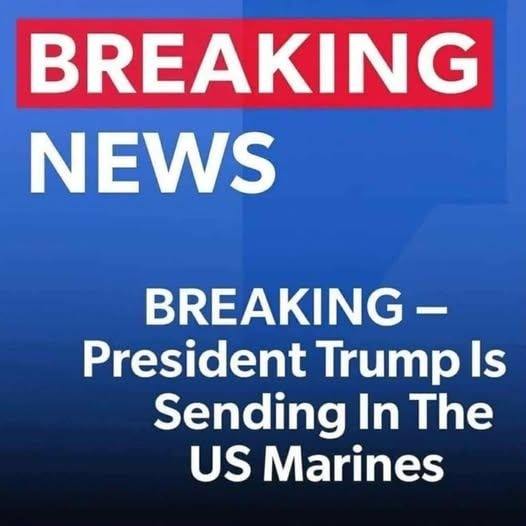
Recent reports confirm that the U.S. government has deployed Marines to assist Immigration and Customs Enforcement (ICE) operations in states including Texas and Louisiana. If you’re trying to make sense of the move, the first key point is scope: officials state clearly that the Marines are not participating in arrests or enforcement actions. Instead, they are assigned to non-combat, support-based responsibilities within ICE facilities, such as administrative coordination and logistical assistance.
To understand why this decision is drawing attention, it helps to separate function from perception. Even though the Marines’ duties are limited to behind-the-scenes roles, the presence of uniformed military personnel near immigration operations has prompted debate. Some critics express concern that it may create the appearance of increased militarization in immigration enforcement, while others worry about the broader symbolism of military involvement in civilian systems.
On the other side of the discussion, supporters frame the move as a resource-management strategy. High-demand regions often place significant strain on immigration personnel, and assigning Marines to administrative tasks can allow ICE agents to focus on casework and primary responsibilities. From this perspective, the deployment is viewed as a temporary operational support measure rather than a policy shift.
For now, the boundaries remain defined: the Marines’ involvement is restricted to logistical and administrative support, with no direct contact in enforcement activities. As with many federal operational decisions, public response reflects a range of interpretations. Understanding the distinction between support functions and enforcement roles can help provide clarity as the situation continues to unfold.