
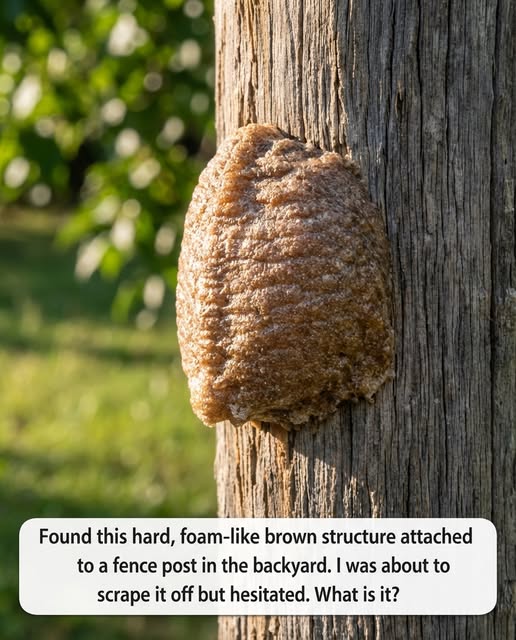
Spotting an unfamiliar brown mass clinging to a fence post or tree branch can be unsettling. It doesn’t resemble a typical bird’s nest, nor does it look like ordinary plant growth. Its hardened, foam-like texture often sparks curiosity — or concern — prompting many people to consider scraping it away. But before removing it, it’s worth pausing. That unusual structure may actually be a positive sign that your backyard environment is healthy and balanced.
In many cases, what you’re seeing is a praying mantis egg case, known as an ootheca. Female mantises create these protective capsules in late summer or early fall after mating. They produce a frothy substance that quickly solidifies into a durable shell, safely housing dozens — sometimes even hundreds — of eggs throughout the colder months. Typically light brown and about one to two inches long, the casing blends naturally with branches, shrubs, and garden structures. Its slightly ridged, textured surface helps shield the developing insects from weather changes and predators.
Though the exterior appears simple, the transformation inside is remarkable. As temperatures warm in spring, tiny mantises emerge ready to begin hunting. These insects are highly valued by gardeners because they naturally feed on common pests like aphids, caterpillars, and flies. Their presence can reduce the need for chemical treatments, contributing to a more balanced and sustainable garden ecosystem. In other words, that odd-looking cluster could actually signal a thriving outdoor habitat.
If you find one in your yard, it’s usually best to let it remain undisturbed. The egg case poses no risk to people or pets, and removing it interrupts the life cycle of a beneficial species. If it’s attached to a fragile area, you can carefully trim the small branch and reposition it somewhere sheltered. What first seemed like a backyard mystery may turn out to be a fascinating glimpse of nature quietly doing its work — supporting the health of your garden one tiny guardian at a time.