
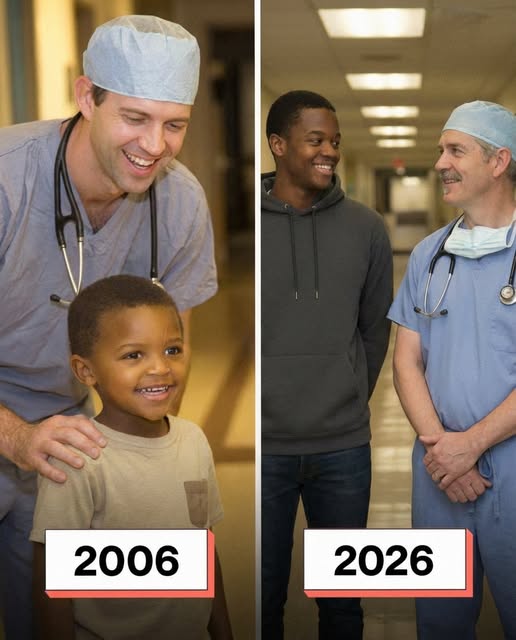
On one of my earliest nights practicing as an independent cardiothoracic surgeon, I encountered a case that would quietly shape the rest of my career. A five-year-old boy had been rushed in after a catastrophic car accident, his condition fragile and deteriorating by the minute. Monitors flashed urgent alerts as our team worked to assess the extent of his injuries, and it quickly became clear his heart and aorta had suffered critical trauma. The procedure that followed demanded complete focus — the kind that makes the rest of the world disappear. Against daunting odds, we repaired the damage and stabilized him. When it was over, I stepped out of the operating room physically steady but emotionally shaken, aware that some moments in medicine never fully leave you.
Waiting just beyond the pediatric intensive care unit were his parents, frozen between hope and fear. The instant I saw his mother, recognition stopped me in my tracks — Emily had been my first love back in high school. Years had passed since our paths diverged, yet there we were again under stark hospital lighting. Telling her that her son would survive released a wave of emotion that words could barely contain. She wept with relief, and I carried the memory of that gratitude long after the night ended. The boy healed remarkably well; the once-prominent scar on his face softened with time, and eventually the follow-up visits ceased — a quiet signal that life was moving forward, exactly as we had hoped.
Nearly twenty years later, after finishing a draining overnight shift, I headed toward the parking lot expecting nothing more eventful than the drive home. Instead, a young man rushed toward me, frustration written across his face. “You changed my life for the worse!” he shouted. Then I noticed the faint, lightning-shaped scar — unmistakable even after all those years. Before I could respond, he urgently asked me to move my car so he could get his mother inside; she was experiencing crushing chest pain. Instinct replaced surprise. Within moments, she was being evaluated, and the diagnosis was alarming: a dangerous aortic dissection that required immediate surgery. When I prepared for the operation and truly saw her face, the realization landed — it was Emily once again, depending on the same steady hands.
The operation was complex, but she pulled through. Later, her son’s anger gave way to vulnerability as he admitted he had long associated his scar and the accident with life’s struggles. Yet the fear of losing his mother reframed everything, helping him see survival itself as an extraordinary gift. During Emily’s recovery, our conversations naturally drifted toward resilience rather than regret, toward the unexpected ways life offers renewal. Experiences like these remind me that healing often extends far beyond a single procedure. Sometimes the lives we touch return to intersect with our own, quietly affirming the purpose behind years of demanding work — and proving that second chances can arrive when we least expect them.