
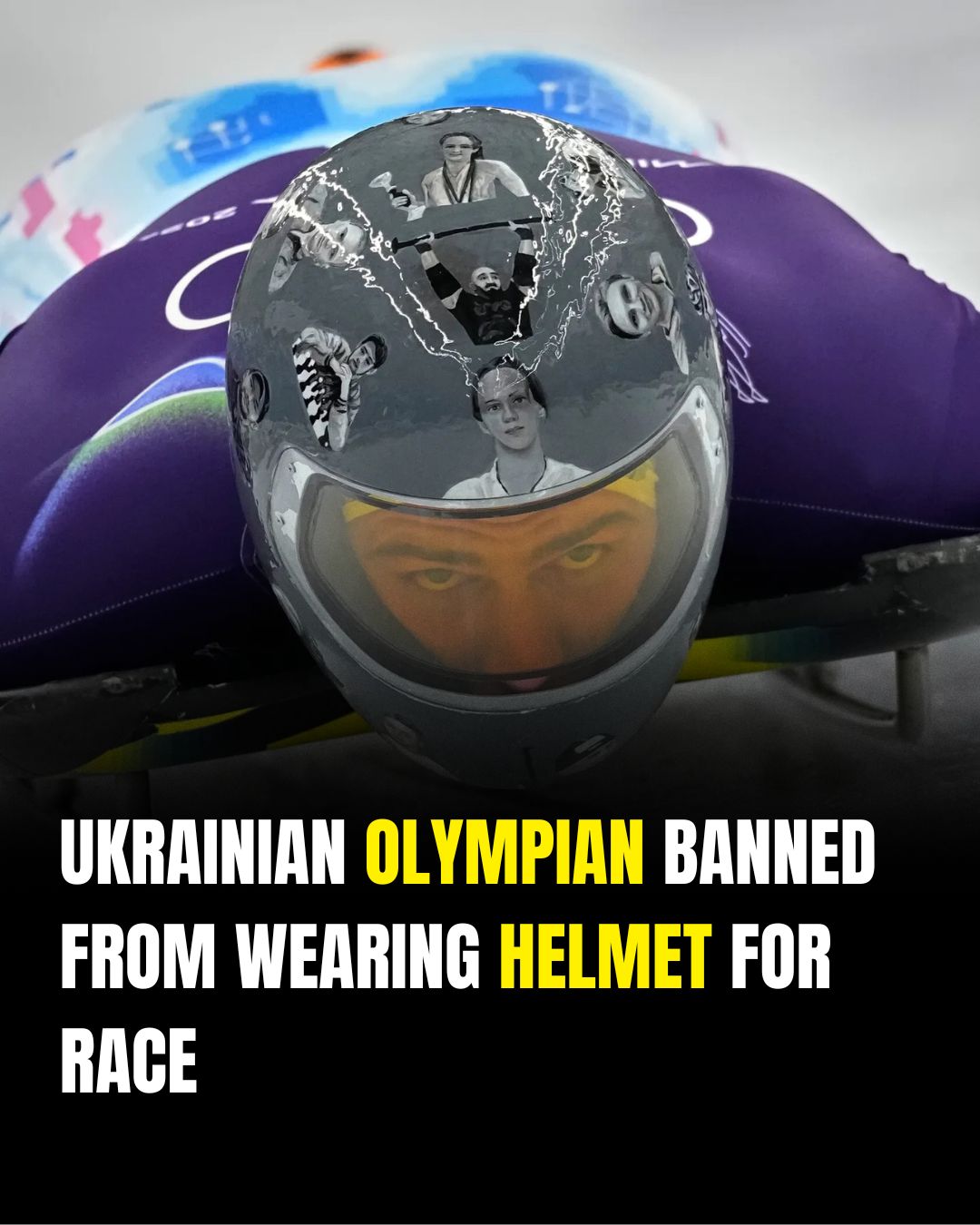
Vladyslav Heraskevych, a Ukrainian skeleton competitor, recently shared his disappointment after learning he would not be permitted to wear a helmet honoring individuals killed during the war in Ukraine at official Olympic events. The 26-year-old athlete described feeling deeply saddened by the decision, explaining that the design was intended as a respectful tribute to fellow athletes and acquaintances whose lives were lost following Russian invasion of Ukraine in 2022. He had previously worn the helmet during training and hoped it could accompany him into competition as a personal symbol of remembrance.
The restriction stems from guidelines set by the International Olympic Committee (IOC). Officials determined that the imagery conflicted with Rule 50.2 of the Olympic Charter, which limits political, religious, or racial messaging at Olympic venues. The rule aims to preserve neutrality and keep global attention centered on sport rather than political debate. According to Heraskevych, the decision was communicated directly by an IOC representative at the Athletes’ Village, making the outcome both official and immediate.
During a media briefing, IOC spokesperson Mark Adams acknowledged that athletes may wish to honor friends and colleagues affected by conflict. However, he emphasized the importance of applying regulations consistently across all participants. As a compromise, the organization indicated that Heraskevych could wear a black armband—an option often recognized as a respectful, non-political gesture of mourning within international competition.
The moment has renewed discussion about how global sporting events balance individual expression with institutional neutrality. Volodymyr Zelenskyy has previously commended Heraskevych for highlighting the human consequences of war, and the athlete has spoken publicly about peace, notably displaying a “No War in Ukraine” sign during the 2022 Winter Olympics in Beijing. As conversations continue, Heraskevych says he remains focused on competing while hoping for understanding around his intentions—illustrating the complex intersection of personal conviction and the shared stage of international sport.