
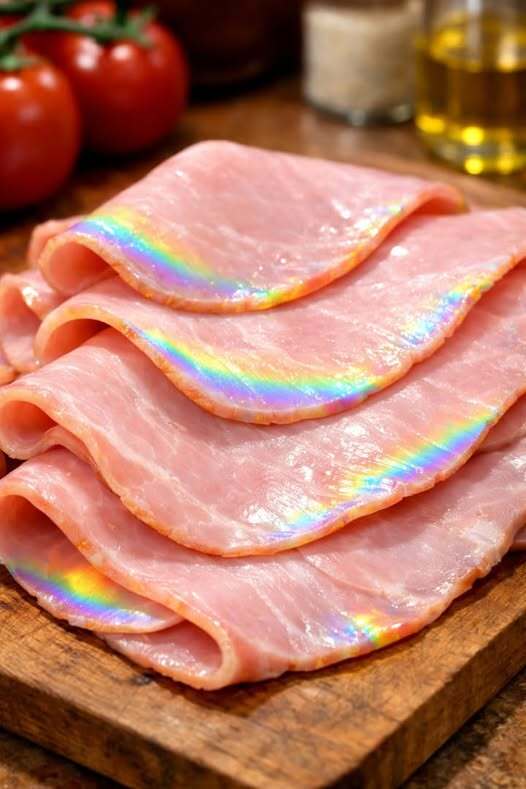
Many people pause the moment they notice it: a glossy, rainbow-like shimmer stretching across a slice of deli ham. The shifting colors—greens, blues, and purples—can look almost metallic, leading some to question whether the meat is safe to eat. While the appearance may seem unusual, color alone rarely tells the full story. Understanding what causes this effect can help you separate harmless visual quirks from genuine food safety concerns.
In most cases, that rainbow sheen is completely natural. It forms when light reflects off tightly packed muscle fibers in thinly sliced meat, causing the light to split into different wavelengths. The result is an iridescent effect similar to what you might see on soap bubbles or a thin film of water. Moisture on the surface and common curing ingredients can make the shimmer more noticeable, especially in pre-sliced or packaged deli products.
What truly matters is recognizing the difference between harmless color shifts and signs of spoilage. Fresh ham typically maintains a soft pink tone and a firm texture. If the meat begins to look dull, develops gray or blotchy patches, or feels sticky or slimy, those are clearer signals that it may no longer be safe. Smell is another reliable guide—strong sour or sulfur-like odors usually mean it’s best to throw the product away.
Storage habits also play a major role in freshness. Once opened, deli meats should be kept tightly sealed and refrigerated, and they’re generally best enjoyed within three to five days. While cool temperatures slow bacterial growth, they don’t stop it entirely, so paying attention to texture, scent, and appearance together offers the most dependable assessment. When in doubt, it’s always wiser to err on the side of caution—because peace of mind is just as important as what’s on your plate.