
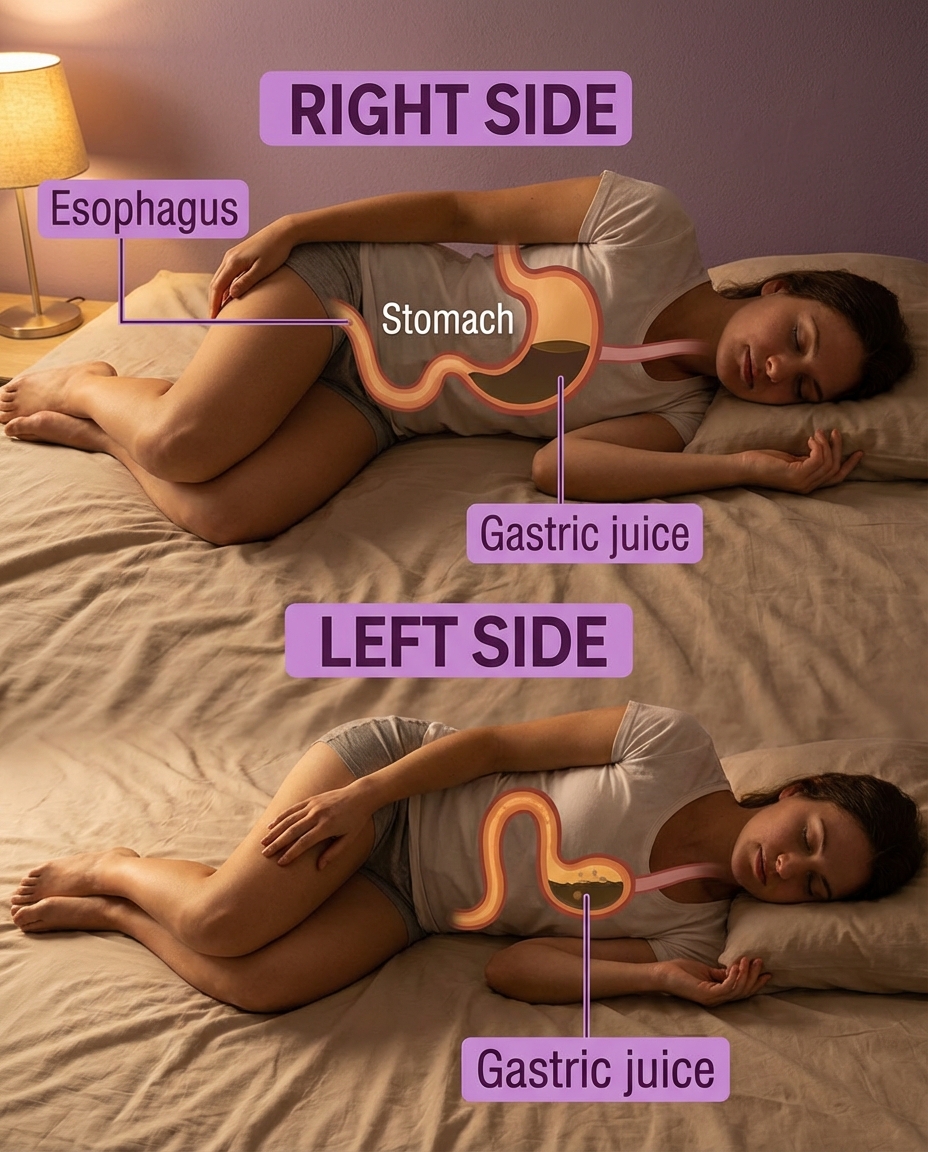
Many people focus on how long they sleep but overlook an equally important factor—how the body is positioned throughout the night. Sleep isn’t a passive state; your body continues working to digest food, circulate blood, and restore energy. The posture you choose can either support these processes or create subtle strain. Health professionals often highlight left-side sleeping as a simple adjustment that may enhance comfort and help the body operate more efficiently during rest.
One commonly discussed advantage relates to digestion. Since the stomach naturally curves toward the left, lying on that side may help keep stomach contents positioned lower than the esophagus. This alignment can reduce the likelihood of mild nighttime reflux or heartburn for some individuals. People who experience discomfort after evening meals sometimes find that this position allows for a more settled, uninterrupted sleep while supporting smoother digestive movement.
Circulation is another area where left-side sleeping may offer benefits. This posture can help ease pressure on certain blood pathways, encouraging steadier blood flow back toward the heart. It may also assist the lymphatic system, which plays a role in filtering waste and supporting immune health. During pregnancy, many healthcare providers recommend left-side sleeping because it can promote better circulation and lessen pressure on internal organs, contributing to improved nighttime comfort.
Transitioning to a new sleep position doesn’t have to feel forced. Simple strategies—like placing a pillow behind your back for support or between your knees for alignment—can make the shift more natural. With time, your body often adjusts, and you may notice calmer nights and more refreshed mornings. While comfort is personal and no single posture suits everyone, exploring small changes in how you sleep can be an easy step toward better rest, steady energy, and overall wellness.