
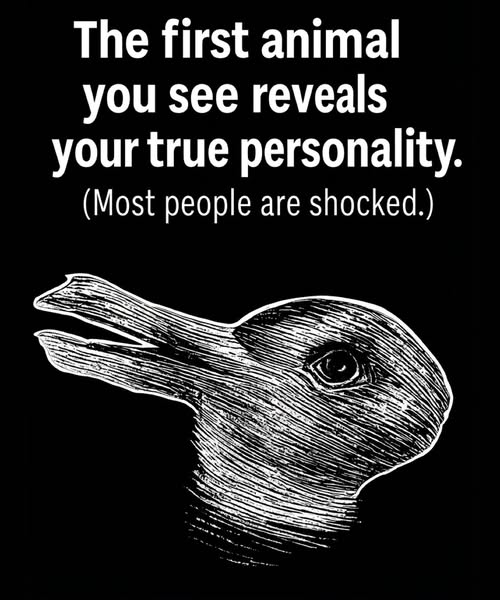
Have you ever looked at an image with someone else and realized you each noticed something completely different? That simple moment reveals an important truth: perception is deeply personal. The brain filters what we see through past experiences, habits, and subtle mental shortcuts, often making decisions before we consciously analyze them. Optical illusions highlight this process beautifully, showing that interpretation is guided just as much by the mind as by the image itself.
Among the most recognized visual puzzles is the Duck–rabbit illusion—a drawing designed to appear as two animals at once. Some viewers instantly spot a duck, while others clearly see a rabbit. Neither perspective is more accurate; the illustration intentionally supports both interpretations. What makes it fascinating is how quickly the brain commits to one version, demonstrating how attention style and cognitive preferences quietly shape everyday perception.
If the duck stood out first, you may naturally lean toward structure and clarity, preferring information that feels direct and reliable. People with this viewing style often excel at staying grounded and focused, especially when quick decisions are needed. If the rabbit appeared immediately, you might be more inclined toward imagination and possibility, noticing nuance and exploring ideas beyond what is obvious. And if you recognized both animals almost at once—or found the image switching between them—it could reflect mental flexibility, suggesting comfort with multiple viewpoints and complex situations.
The deeper message of this illusion isn’t about labeling personality; it’s about awareness. Our minds are constantly interpreting the world, sometimes without us realizing it. By pausing to notice how we see things, we strengthen curiosity and openness—qualities that enrich daily life. After all, perception isn’t fixed; it evolves with experience. Today you may see the duck, tomorrow the rabbit, and sometimes both at once—a gentle reminder that the world often holds more possibilities than our first glance reveals.