
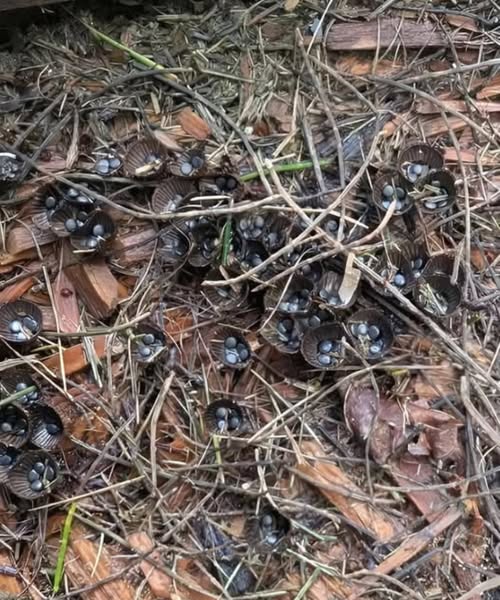
It was one of those moments that makes you pause mid-step. Nestled neatly between two flowerbeds were clusters of tiny, perfectly round shapes arranged like miniature nests. At first glance, they looked deliberate—almost designed. We wondered if they were seeds, insect eggs, or something else entirely. Nothing we could think of quite explained their symmetry or placement, and their quiet strangeness instantly drew us in.
Curiosity won out, and we showed photos to my friend’s grandfather, a lifelong gardener with decades of hands-on experience. The moment he saw them, his face lit up. He explained that what we’d found were birds’ nest mushrooms, a small but fascinating group of fungi that resemble tiny nests holding eggs. Those “eggs,” he told us, aren’t eggs at all—they’re spore-filled capsules that play a key role in how the fungi reproduce.
What makes these mushrooms especially remarkable is how they spread. When raindrops hit the little capsules, the impact sends them flying into the surrounding soil, scattering spores and encouraging new growth nearby. It’s an elegant, natural system—simple, efficient, and completely hidden unless you know what you’re looking at. Learning how something so small could be so cleverly designed changed how we looked at that patch of ground.
Since then, every garden walk feels different. Ordinary soil no longer seems ordinary at all. The birds’ nest mushrooms were a quiet reminder that nature doesn’t always announce its wonders loudly. Sometimes, it leaves them right at our feet—waiting for someone curious enough to stop, look closely, and appreciate the small miracles hiding in plain sight.