
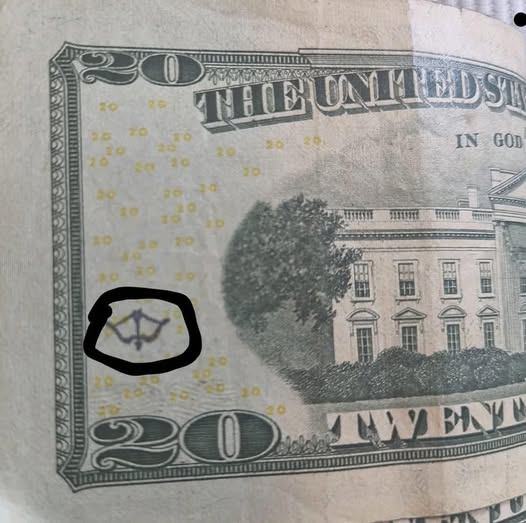
Have you ever noticed a U.S. dollar bill marked with small stamps, symbols, or inked impressions that seem slightly out of place? At first glance, they can look suspicious or accidental. In reality, these markings—commonly called chop marks—offer a glimpse into the journey a bill may have taken far beyond American borders. They’re added by money handlers or currency exchangers to indicate that the bill has been inspected and accepted as genuine.
Chop marks are most often found in regions where U.S. dollars circulate widely outside the United States, including parts of Asia, Africa, and Latin America. The practice has deep historical roots. In China, merchants once stamped silver coins to verify their weight and purity before accepting them in trade. That same principle carried forward as paper currency became more common. Because the U.S. dollar is trusted and widely used internationally, it became one of the most frequently stamped currencies.
For money changers, these small marks serve practical purposes. They signal authenticity to the next handler, reduce the need for repeated inspections, and help track circulation in places where modern verification tools may not be available. The stamps are usually small and carefully placed so they don’t obscure security features or serial numbers, appearing instead as simple symbols, initials, or geometric shapes.
Although U.S. regulations discourage defacing currency, chop-marked bills typically remain valid and retain their full value. That said, heavily stamped notes may occasionally confuse vending machines or raise questions at banks. When you come across one, you’re holding more than spare change—you’re holding a quiet record of global exchange, proof that even everyday money can carry a history shaped by travel, trust, and trade.