
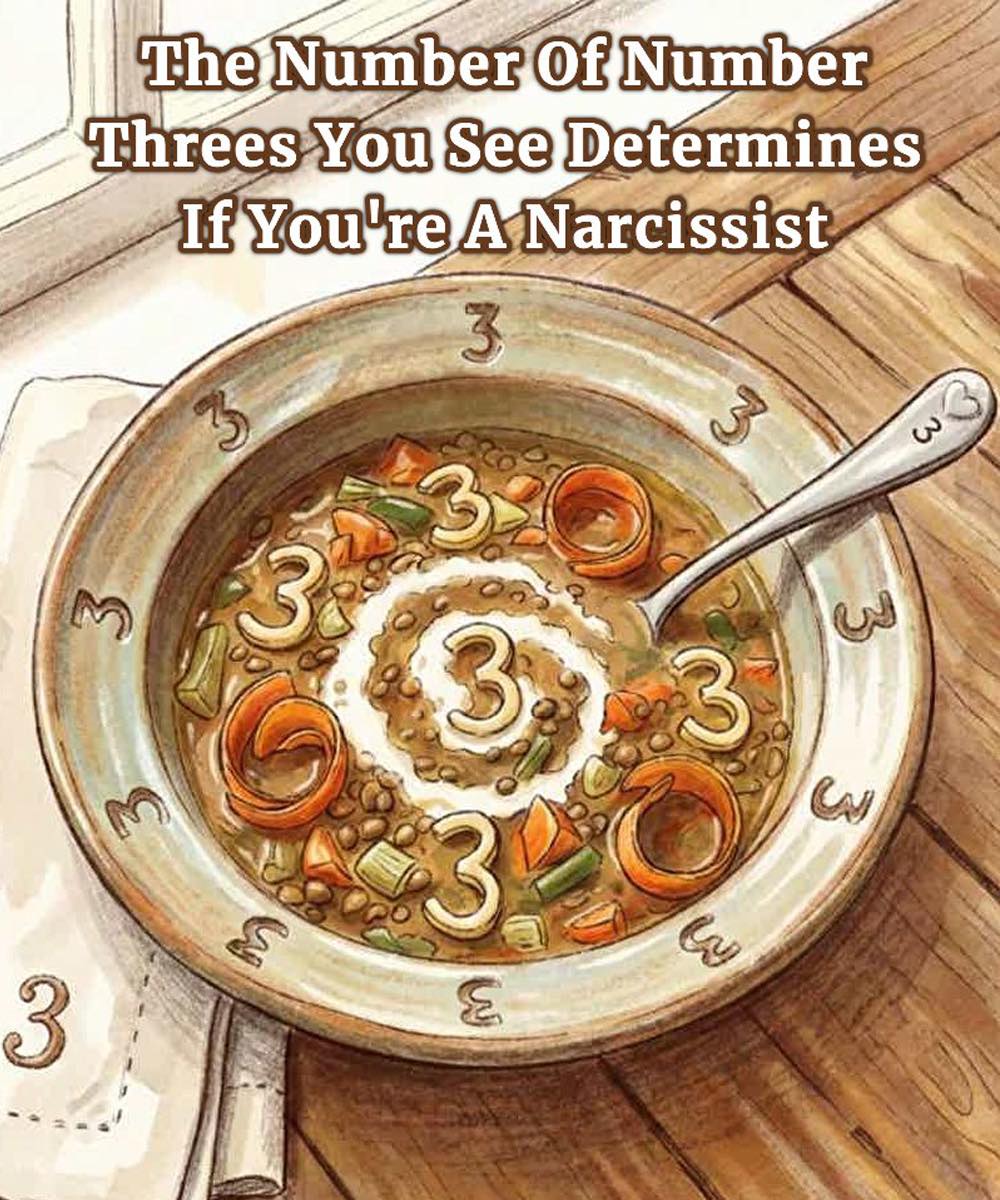
At first, it looks comforting and unremarkable: a bowl of soup resting on a wooden surface, warm and familiar. Nothing about it feels unusual. But give it a few extra seconds, and something curious begins to happen. Lines curve in unexpected ways, shadows feel intentional, and shapes that once seemed random start to connect. Before long, many viewers notice the same thing—the number three appearing again and again, woven subtly throughout the image.
For some people, only a few threes jump out. Others keep spotting more, almost as if the picture refuses to stop revealing itself. What begins as a casual glance turns into a visual challenge, pulling the viewer deeper with each discovery. The experience feels personal, even slightly unsettling, because no two people seem to see the image the same way.
Online, the illusion has been paired with bold psychological claims. Viral posts suggest that the number of threes you identify says something revealing about your personality, even hinting at traits like confidence, self-focus, or narcissism. These interpretations are often divided into ranges—seeing just a few threes is said to reflect practicality, while spotting many is framed as intense self-awareness or control. The more dramatic the claim, the more attention it attracts.
The reality, however, is far less alarming and far more interesting. There is no scientific basis for linking an optical illusion to personality disorders or character traits. What the image actually demonstrates is how the human brain processes patterns. Once your mind is primed to search for something, it becomes remarkably good at finding it—even in shadows, curves, and abstract details. The illusion works because perception is flexible, curiosity is contagious, and the brain enjoys the satisfaction of discovery. In the end, the number of threes you see doesn’t define who you are—it simply shows how eagerly your mind engages when invited to look a little closer.