
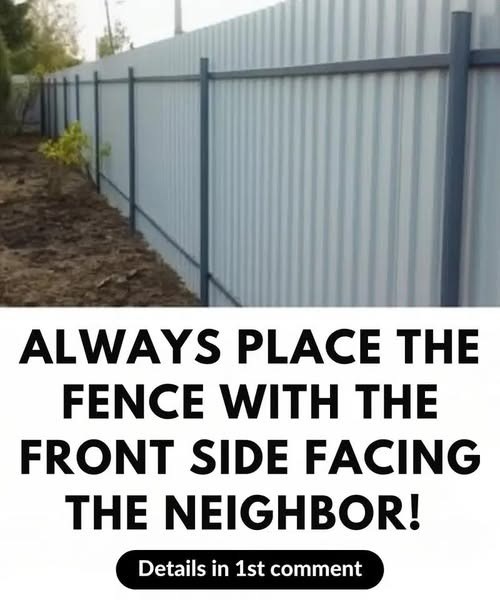
When homeowners plan a fence, the focus is usually on privacy, safety, and defining boundaries. But there’s one often-overlooked detail that can matter just as much as height or materials: which side faces outward. Positioning the finished, polished side of the fence toward your neighbor isn’t just a design choice—it’s a small decision that can have a big impact on neighborhood harmony.
Facing the attractive side outward is widely seen as a gesture of respect. It signals consideration for the people who share your property line and helps avoid unnecessary tension. Leaving the unfinished, structural side exposed can come across as careless or dismissive, even if that wasn’t the intention. In many communities, this expectation is so common that it’s written into local building codes or homeowner association rules, which often require the finished side to face neighboring properties or public spaces.
There are also practical and financial reasons to get this right. Ignoring local regulations can lead to complaints, fines, or the expense of having to reorient or rebuild the fence. Beyond compliance, fence orientation affects curb appeal and property value. A fence that looks clean and intentional from all angles contributes to a cohesive neighborhood appearance, while an exposed framework can make a property feel unfinished or poorly maintained.
To avoid issues, start by reviewing local codes and HOA guidelines before construction. Communicating with neighbors ahead of time can also prevent misunderstandings and build goodwill. Some homeowners even opt for double-sided fence designs so both sides look equally finished. With regular upkeep—like painting, sealing, and timely repairs—a well-oriented fence becomes more than a boundary. It becomes a quiet sign of courtesy, cooperation, and thoughtful ownership that benefits everyone involved.