
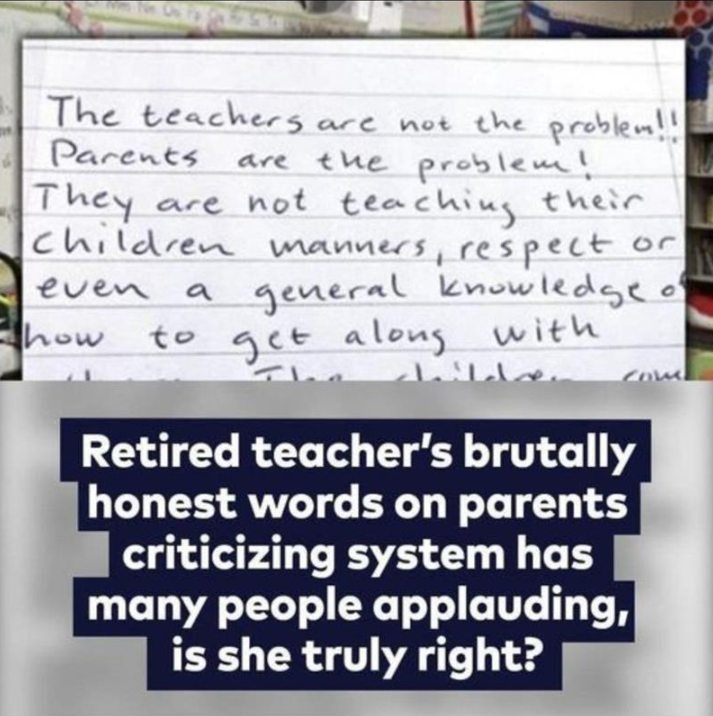
In debates about the state of modern education, attention usually centers on policies, testing standards, and school reform strategies. Legislators argue over benchmarks, administrators analyze data, and advocacy groups push for systemic change. Yet one of the most enduring contributions to this conversation did not come from a policy paper or research institute, but from the lived experience of a classroom teacher who shifted the focus away from institutions and toward something far closer to home.
That voice belonged to Lisa Roberson, a retired teacher whose open letter, published in the Augusta Chronicle, sparked widespread discussion well beyond her local community. Written in 2017, her message challenged the assumption that declining academic outcomes are primarily the result of poor teaching or outdated methods. Instead, she argued that schools are increasingly asked to compensate for gaps in values, structure, and responsibility that traditionally begin at home.
Roberson described classrooms where teachers spend as much time managing behavior and teaching basic social skills as they do delivering academic instruction. One of her most striking observations highlighted a mismatch of priorities: students arriving in expensive clothing while lacking basic supplies like pencils or notebooks, leaving teachers to quietly fill the gap themselves. For her, this was not simply about money, but about what families choose to emphasize—status over preparation, appearance over responsibility.
Her letter also questioned how society defines a “failing school.” Rather than pointing solely to test scores, Roberson urged readers to consider parental engagement. Are families communicating with teachers, attending school events, and ensuring children arrive rested, fed, and ready to learn? She acknowledged that economic and social pressures can limit involvement, a point raised by critics of her stance, but maintained that no amount of reform can succeed if schools are expected to replace the role of parents entirely.
Years later, Roberson’s words continue to resonate because they address a foundational truth: education is a shared responsibility. Schools can provide resources, structure, and skilled educators, but they cannot instill curiosity, discipline, or respect on their own. The lasting impact of her letter lies not in offering easy solutions, but in prompting reflection—reminding communities that the most influential classroom often exists at home, and that lasting learning begins long before a child ever takes a seat at a desk.