
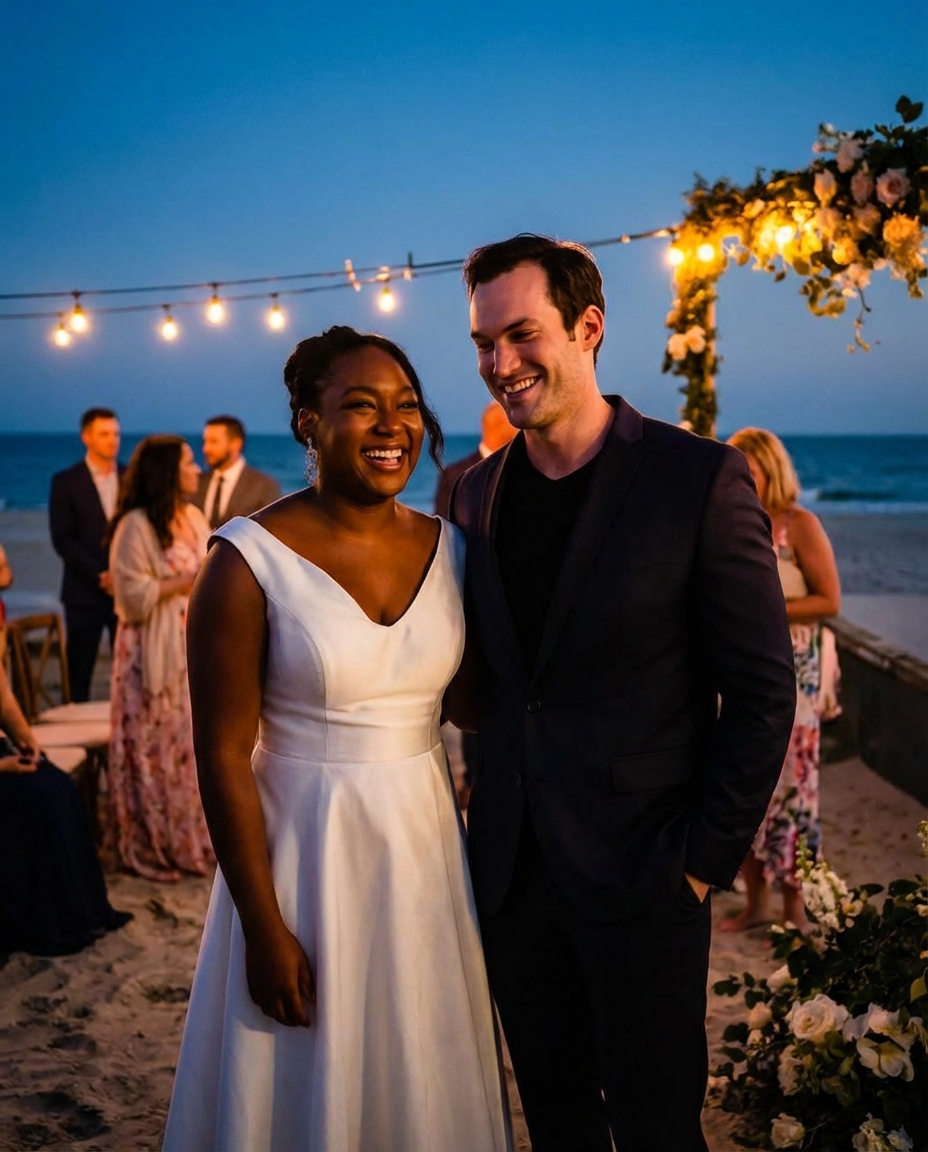
I thought my wedding night would feel like an exhale—the moment where the chaos of the past finally loosened its grip. Instead, I stood alone in the bathroom, peeling off my makeup while the echoes of laughter faded into quiet walls. My dress slipped from one shoulder, candles scented the air with jasmine, and everything looked exactly as it should. My best friend Jess knocked softly to check on me, and I assured her I was fine. I almost believed it. But beneath the calm was an old, familiar tension in my body—the kind that once warned me, long before my mind caught up, that something wasn’t right.
The man waiting in the next room wasn’t just my new husband. Ryan was also the boy who had quietly dismantled my confidence years ago. His cruelty was subtle, wrapped in humor and plausible deniability, the kind that made everyone else laugh while I learned to shrink. A nickname he gave me followed me through high school, reshaping how people saw me and how I saw myself. When I ran into him again years later, I wanted to disappear—but he surprised me. He apologized without defensiveness, acknowledged the harm, and spoke openly about therapy, sobriety, and accountability. Slowly, guarded conversations became shared meals, and shared meals became trust. Against my better judgment, I let myself believe that growth could outweigh history.
Our wedding reflected that hope. It was small and intimate, held under a fig tree in Jess’s backyard, surrounded by people who loved me deeply and watched Ryan carefully. He cried through his vows, hands shaking as he promised to spend his life proving himself worthy of forgiveness. I cried too—not from forgetting, but from believing we had built something stronger than what came before. Yet later that night, when I entered the bedroom, something had shifted. Ryan sat on the edge of the bed, breath shallow, eyes heavy with a truth he’d been holding back. When he finally spoke, his voice was barely above a whisper: he was ready to tell me everything.
What followed unraveled the illusion I had worked so hard to protect. Ryan admitted that years ago, when the rumors about me began, he hadn’t just stayed silent—he participated. Fearful of becoming a target himself, he chose self-preservation over decency. Then came the final blow: he’d been writing a book about his past, about his mistakes and supposed redemption, and my pain had been folded into his narrative without my consent. Names changed, details blurred—but the betrayal was unmistakable. In that moment, I understood something with painful clarity: love and remorse don’t erase entitlement. And sometimes, hearing the full truth doesn’t bring closure—it gives you the strength to finally choose yourself and walk away.