
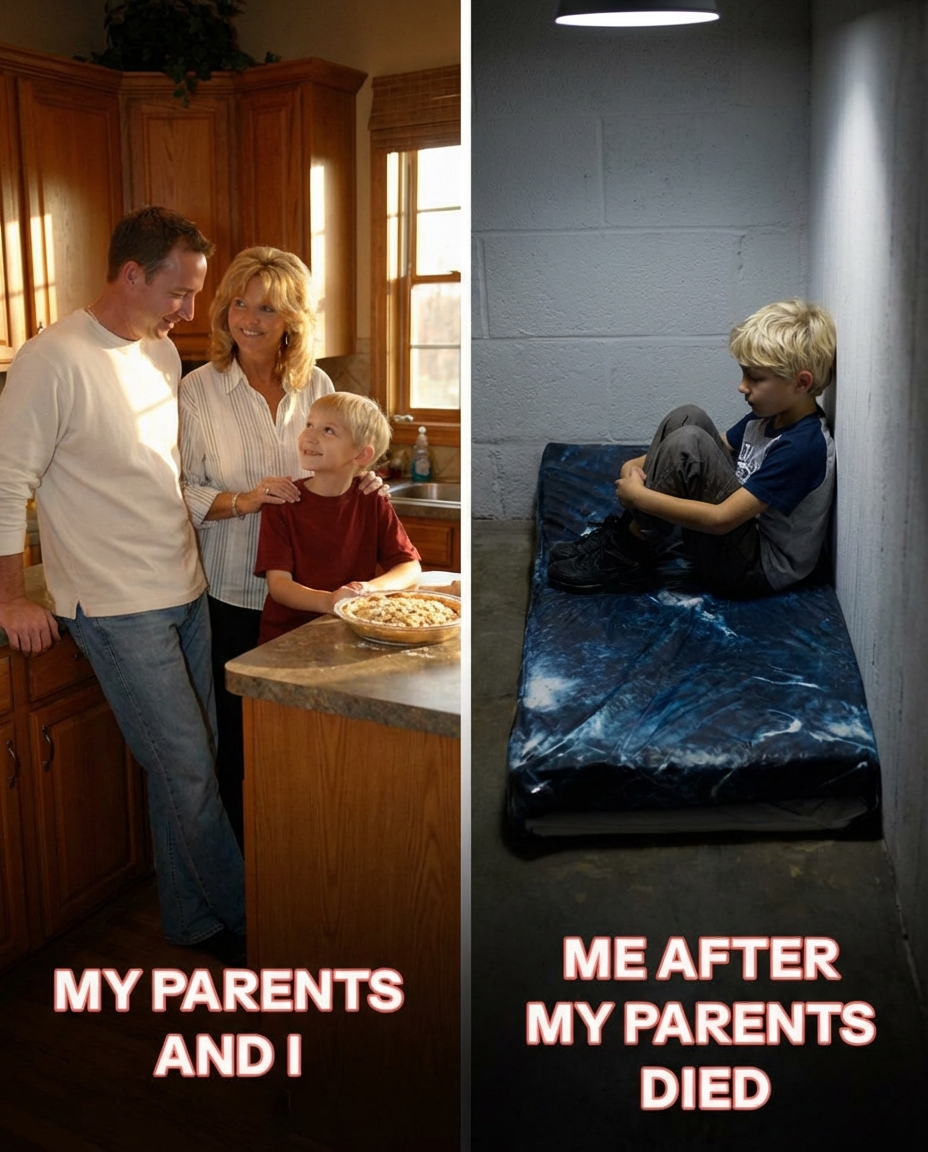
I was ten years old when my parents died, and overnight the world lost its logic. It was winter—the kind that buries streets in snow and lets adults hide catastrophe behind phrases like “dangerous road conditions.” My mother, Claire, and my father, Michael, left the house one evening and never returned. After the funeral, my aunt Linda arrived wrapped in public sympathy. She hugged me tightly, spoke loudly about taking me in, and made sure every onlooker believed I was safe now. I believed it too. When you’re a child stripped of everything familiar, hope latches onto whoever remains.
What followed didn’t feel like rescue. It felt like erasure. Linda’s house placed me in a forgotten back room—no bed, just a thin mattress and a stale blanket that smelled of storage. Her children filled their rooms with noise, toys, and comfort, while I learned quickly to be quiet and undemanding. Whenever I asked about my parents’ belongings, I was told “later,” a word that quietly turned into never. As time passed, the signs became impossible to ignore: renovations, a newer car, expensive activities for my cousins. The inheritance my parents left behind was clearly funding a life that wasn’t mine.
As I grew older, questioning anything only earned reminders to be grateful. Then came the decision—made without me—that boarding school was “for my own good.” Distance made forgetting easier. Phone calls dwindled. When I became an adult and returned to the house I once knew as home, a stranger answered the door. It had been sold years earlier. Linda was gone. I learned to survive quietly after that—working whatever jobs I could find, sleeping on couches, saving relentlessly. Not because life felt secure, but because I refused to break. Eventually, culinary school and sheer persistence led me to become a pastry chef, and then a small business owner. For the first time, stability felt earned and real.
Then one night, after closing my bakery, three sharp knocks cut through the quiet. Not hesitant. Not polite. Expectant. When I looked through the peephole, my chest tightened. Linda stood there—older, diminished, dressed in the careful disguise of someone unraveling. She didn’t ask how I’d been. She looked past me, complained about the cold, and told me to let her in. She said she was sick and alone. When I suggested calling her own children, she admitted they no longer spoke to her. For a moment, I saw her loneliness. Then her tone hardened, and the truth surfaced: she still believed I owed her. I let her inside that night—but I knew I wasn’t just opening a door. I was confronting a past that had once taken everything, and this time, I was determined it would not do so again.