
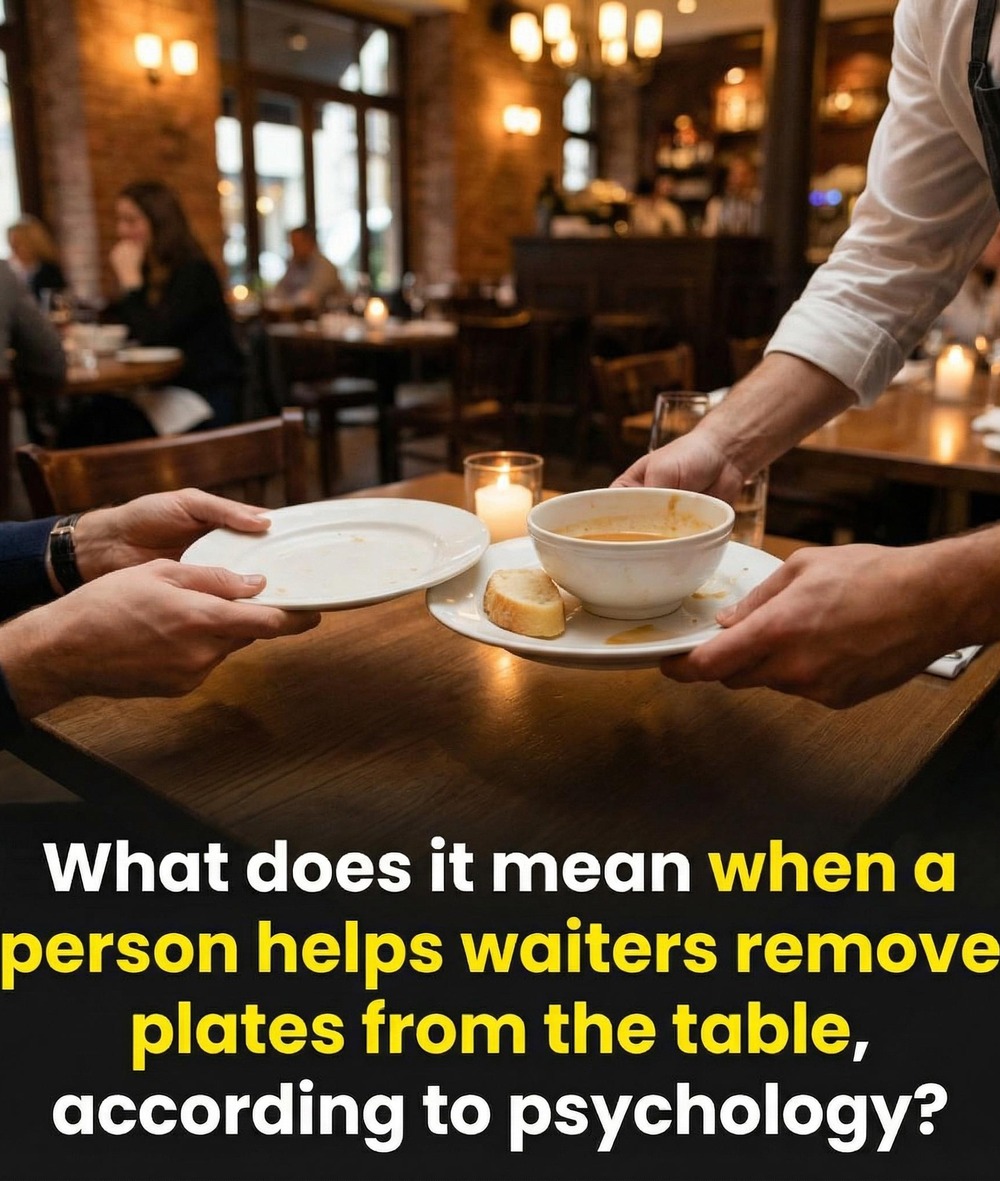
Amid the hum of conversation, the clatter of cutlery, and the low glow of restaurant lights, some moments quietly stand out. One such moment is almost mundane: a diner sliding a few empty plates toward a waiter with a small, effortless smile. It’s the kind of gesture that rarely draws attention, yet it speaks volumes. In spaces where most people are focused on their own meals and conversations, those who instinctively help tend to show a natural awareness of others. They don’t act out of duty or etiquette—they respond out of empathy, easing the shared rhythm of a busy environment without making it about themselves.
Behavior experts often point out that this kind of instinctive help is rooted in respect for service work. People who lend a hand usually recognize the physical and mental demands behind the job, whether from personal experience or simple observation. Passing a plate or clearing space at the table isn’t about speeding things along; it’s a subtle way of saying, I see your effort. Instead of treating dining as a one-sided service transaction, they approach it as a brief human exchange where mutual consideration matters. That mindset sits at the core of prosocial behavior—small, voluntary actions that support others without expecting credit.
This habit can also signal emotional confidence. Individuals who feel comfortable in social settings tend to notice unspoken cues: a waiter balancing too much at once, a crowded table, or a moment where help would feel natural rather than intrusive. They step in smoothly, without disrupting the flow. Research suggests that people who act this way are often driven by inner values, not the need for approval. Helping becomes an extension of who they are, not a performance. It also reflects humility—an understanding that no task is beneath them and that shared spaces work better when everyone contributes, even briefly.
Of course, choosing not to help doesn’t automatically mean someone lacks consideration. Cultural norms, personal boundaries, and context all play a role. What truly matters is intention. When assistance is offered with genuine care, it subtly improves the emotional atmosphere for everyone involved. These fleeting moments of courtesy—easy to miss in a busy restaurant—can ease stress, foster goodwill, and reinforce a sense of shared humanity. In a world where service workers often face impatience, a simple, thoughtful gesture can quietly restore balance, proving that meaningful kindness doesn’t require grand effort to make an impact.